"I got a letter with a number and no working."
Your assessment notice shows an amount and the figures behind it. It does not show what each of the eight steps did. So the only way to check it is to already know how it works.
Free, and nothing changes on this page. Your estimate now, then three short follow-ups over the next week, and we stop. Unsubscribe in one click.
Everything is unlocked. Change the nights of care, either income or a child's age, and run it again as often as you like. Nothing is deducted, nothing counts down, and none of it expires.
Before you agree on care, know what every night is worth
You have a letter with a number on it and no working. You may have to agree on care while things are still raw. Here is what nobody tells you: the rules turn nights of care into money in seven bands, five of them flat, and the law lists ten lawful reasons to change an assessment.
A family lawyer will typically charge $1,500 to $5,000 to work through this with you. This prices a change of assessment, a second family, two cases at once and every extra night of care, on your own figures. In about three minutes, for $19.
A rough guide, based on two children aged 6 and 11. The full calculator asks for your own children's ages, any second family and everything else.
Sound familiar?
It runs on an eight step formula, a costs table tucked inside a law, a seven band care scale and ten separate ways to change the result. It was written for officials, and you are reading it in one of the hardest years of your life. If any of these sound like you, you are in the right place.
Your assessment notice shows an amount and the figures behind it. It does not show what each of the eight steps did. So the only way to check it is to already know how it works.
Adjusted taxable income, child support income, income percentage, care percentage, cost percentage, child support percentage. Six terms that sound alike, and every one of them changes what you pay or receive.
A friend says yes. A forum says no. The answer is no, on either side, at any income. The mix-up comes from Family Tax Benefit, where a partner's income does count.
Everyone asks this before signing a parenting plan. Almost nobody answers it with a number. A single night either side of a line in the care table can be worth thousands of dollars a year, for as long as the assessment runs.
You enter the children, the nights and the two incomes. We run the same eight step formula Services Australia runs, show every line with your figures in it, then price every legal option you have. No appointment, no sales call, and you never have to give your name, your Customer Reference Number or your tax file number.
In about three minutes you will see what you pay or receive, and roughly how far apart your options are. The estimate is free.
What one night can cost
Two parents in two different families. Each has two children aged 6 and 11, and both earn the same. Each agreed a care plan in good faith, without seeing a table nobody had shown them. One ended up on 51 nights a year. The other ended up on 52.
Both parents are made up. Nothing else here is. The two incomes are annualised male total average weekly earnings and the default income the scheme itself uses, both published in the Child Support Guide, and the maths is the eight step formula applied to them. You can run the same figures yourself in about thirty seconds.
Your choices
| Guess What most people do |
A family lawyer Child support advice |
Child Support Calculator This calculator |
|
|---|---|---|---|
| What it costs | Nothing now, years of the wrong figure |
$1,500 to $5,000 typical fees |
$19, once |
| Ready tonight, no appointment | |||
| The eight step formula, every line shown | |||
| All ten reasons to change an assessment, each priced | Usually only the one you ask about | ||
| What every extra night of care is worth | Rarely, and billed by the hour | ||
| Run it again when care, income or the January figures change | A new bill each time | Free, as often as you like | |
| Advice personal to you, and someone to act for you |
Key dates
Child support runs on dates. Miss one and you can be stuck with a figure you did not choose, and often cannot undo. These dates are set by the rules, not by us. None of them is a sales offer.
Report a change in care within 28 days and the new level generally applies from the day it changed. Report it later and an increase in your care usually applies only from the day you told them, while a decrease still applies from when it happened. See where the care steps fall.
The self-support amount, the whole costs of the children table, the fixed rate and the minimum rate all change on 1 January. A sum done on last year's figures is not a little out. It is out in every line. These are the - figures, and the self-support amount is -.
Your current income must be at least - below the income in your assessment before you can lodge an estimate. At 14% below you cannot lodge one. An estimate never backdates either, so every week you wait is a week assessed on the old figure.
Free vs paid
The free estimate tells you what your assessment is and roughly how far apart your options are. The full report shows the working and puts a dollar figure on every option. Every section and every chart uses your own figures, with every line of the maths on show, so you can check it or question it.
See a full sample report, free. It runs a made-up household all the way through, shows the open half exactly as a customer sees it, and lets you ask the assistant two questions.
How it works
If you can read a payslip, you can use this. Simple mode asks only what decides most of the answer. Advanced mode adds second families, second cases and change of assessment amounts.
How many children and how old, how many nights a year they are with you, and both adjusted taxable incomes. That is it. We never need a name, a Customer Reference Number, a tax file number or a bank detail, because none of them are part of the arithmetic.
Your assessment a year and a week, your care percentage and what it is credited as, where the next care step falls in both directions, and every legal option open to you named and explained in full.
$19 opens the full report: the eight steps with your figures, all ten change of assessment reasons, every night of care, and every year until your youngest turns 18. PDF included, ready to take to mediation.
The eight steps are section 35. The costs table is Schedule 1. The care conversion is section 55C. The ten reasons are section 117(2). Every figure comes from the Child Support Guide, section 2.3.2.
The report writes out all eight steps with your own numbers in each line and the section of the Act beside it, so you can check the line you disagree with rather than the whole answer.
This is general information, not legal or financial advice. We are not licensed to tell you what to do, and only Services Australia can tell you what your assessment actually is. What most people are missing is the arithmetic, not an opinion.
If the calculator cannot properly model your situation, or something goes wrong, tell us within 14 days and we will refund you. No forms, no argument.
Included with the report
Every report comes with an assistant that has read your report: your children, your nights, your two incomes and every option priced. It answers questions about it in plain English. It is not a search box and not a help page.
An example of the kind of answer it gives, on made-up figures.
Price
One payment. No expiry, nothing to renew, and we never keep your card. It opens the whole report and lets you redo the sums as often as you like. That matters, because a child support assessment is remade every January and every time care or income changes.
Prices in Australian dollars. Pay securely through PayPal with a card or PayPal balance, no account needed. See a sample report before you decide.
Child support FAQ
Child support is worked out with an eight step formula. Each parent's adjusted taxable income has a self-support amount of $31,046 taken off, plus an amount for any other children they support. The two results are added together, and each parent's share is their income percentage. Nights of care become a care percentage, which a table turns into a cost percentage. Income percentage minus cost percentage decides who pays and how much.
Usually, yes. Equal care gives both parents a 50% cost percentage, but it does not make their incomes equal, so the parent with the higher child support income generally still pays. Nothing is payable only when both parents' child support incomes are also equal. The 50% band runs from 176 to 189 nights a year, and every night in that range gives the same answer.
No. A new partner's income is not used in a child support assessment, on either side, at any income. Only the two parents' own adjusted taxable incomes count, and a non-parent carer's income is not counted either. A partner's income can affect Family Tax Benefit, which is a separate payment with separate rules. That is usually where the confusion starts.
Shared care starts at 128 nights a year, which is 35% of the nights, or about five nights a fortnight. At 128 nights the cost percentage moves from a flat 24% to 25%. From there, each extra percentage point of care is worth two points of cost percentage. The biggest single step is much lower down, at 52 nights a year.
It can be worth nothing at all or thousands of dollars a year, depending on which side of a step you are on. The care table has seven bands and five of them are flat, so between 52 and 127 nights a year an extra night is worth nothing. Then one more night crosses a line. The steps fall at 52, 128, 176, 190, 238 and 314 nights a year.
The minimum annual rate is $551 a case, and it only applies where the paying parent has less than regular care (under 14%) of every child in the case. A separate fixed annual rate of $1,825 a child applies to a paying parent whose adjusted taxable income is under $26,720, who received no income support payment in the last relevant year, and who has less than shared care. Both can be reduced on application.
The self-support amount is $31,046 a year for the child support period starting 1 January 2026. It is one third of annualised male total average weekly earnings. It is taken off both parents' adjusted taxable incomes before anything is shared out, whatever they earn and wherever they live, and it is indexed every 1 January.
A change of assessment is an application to have the formula set aside for your case because it gives an unfair result, and applying costs nothing. The law lists ten reasons in section 117(2), and you have to make out at least one of them with evidence. Either parent can apply. Services Australia decides it rather than a court, and the other parent gets to respond.
Section 117(2) sets out ten: the high cost of spending time with a child; the child's special needs; an education both parents intended; the child's own income or property; money or property already transferred for the child; child care costs for a child under 12; necessary expenses that reduce capacity to pay; income, earning capacity or resources the assessment misses; a duty to maintain another child or person; and a resident child.
Yes, if your income has dropped by at least 15%, you can lodge an income estimate. It takes effect from the day you lodge it and never before, so every week of delay is a week assessed on the old figure. A drop of less than 15% is not enough on its own, and would need one of the ten change of assessment reasons instead.
You have 28 days. Report a care change within 28 days and the new level generally applies from the day care actually changed. If you report it later and your care went up, the change usually applies only from the day you told them. If your care went down, it still applies from when it happened.
Yes. A grandparent or other non-parent carer can apply for child support if they care for the child at least 128 nights a year and are not the partner of either parent. The carer applies for child support from both parents, not just one. The carer's own income is never counted in the assessment, and neither is their partner's.
No. Salary sacrificing into super lowers your tax but does nothing to your child support. The assessment uses adjusted taxable income, which adds four things back onto taxable income: reportable fringe benefits, reportable super contributions, net investment losses and foreign income. Negative gearing works the same way, with the loss added straight back. Both parents' figures are printed on the assessment notice.
Yes, through a change of assessment under reason 3, but only where both parents intended the child to go to that school. The test is what both parents planned, not what one of them now wants, and enrolment forms signed by both parents are the strongest evidence there is. The parent paying the fees is credited with them, and applying costs nothing.
No, and nothing here pretends to be. Services Australia runs the child support scheme and is the only body that can tell you what your assessment actually is. This calculator applies the published rules to the figures you type in, shows every step, and prices options a quick estimate cannot show.
A parenting plan gets signed and a care percentage gets recorded. Both stay put until someone goes to the trouble of changing them. Three minutes on the real maths now costs you nothing. Finding out in four years that one night mattered costs a lot more.
No card. No sign up. Your estimate appears as soon as you finish.
You do not need to understand the formula. You only need to know what it gives you, and what else it could.
Runs the full eight step formula, including multi-case, second families and non-parent carers. Then it prices all ten change of assessment reasons and every one of the 365 nights of care, for a fraction of what a family lawyer charges.
Child support figures as at -.
Your free estimate
You have seen where you stand. What you have not seen is which option is worth what, on your own figures, over the years until your youngest turns 18.
Your login and receipt go to this address. It can be different from your PayPal email.
And you can ask it questions. If you want to, you can ask the assistant that comes with your report to explain any figure in plain English. It is given the amounts on your report, never your name or your email, and the conversation stays in your browser.
A link straight back to this estimate, the 1 January 2026 figures it was built on, and the two dates that matter most: the 1 January indexation and the 28 day rule on reporting a change in care.
Your estimate now, then three short follow-ups over the next week, and we stop. Unsubscribe in one click. We never sell your address.
One payment, and it never expires
Child support is paid every week until your youngest turns 18. A small error, or one night of care on the wrong side of a line, repeats in every one of those weeks. The full report prices every legal option you have, on your own figures, so the arrangement is agreed on arithmetic, not on a guess.
Yes, it is included, and using it is entirely your choice. It sits behind one button on your report and does nothing until you press it. Nothing in the report is held back from somebody who never opens it.
When you do ask it something, what it receives is the figures on your report: incomes, nights and ages. Not your name, not your email address, not your account, and never a Customer Reference Number, tax file number or bank detail. We do not hold those in the first place. The name you can put on the report cover is optional and is not part of what it is given. The conversation stays in your browser tab and is gone when you close it, and we record that a question was asked without recording what it said.
Section 5 of the privacy policy sets out exactly what does and does not travel, including who processes it.
No. You pay once and the access is yours. There is no subscription and nothing renews. PayPal handles the payment, so we never even see your card number.
No, and nothing here pretends to be. Services Australia administers the scheme and is the only body that can tell you what your assessment is. This applies the published rules to the figures you type in, shows all eight steps of the working, and prices every option a quick estimate cannot show: a change of assessment, a second case, a second family, or what one more night of care is worth.
Child Support Calculator provides general information, not legal or financial advice. We are not licensed to give personal advice, and we never tell you which option to pick. We apply the published rules to the figures you enter and show you what they produce, with all the working visible. Your actual assessment is made by Services Australia, and so is any decision on a change of assessment.
Pay once and the full report opens straight away. It stays open for this scenario and every one you run afterwards.
Your login and receipt go to this address. It can be different from your PayPal email.
Child support examples
Every household on this page is invented. Nothing the calculator does with them is. The same engine that builds a paid report solves them when this page loads, and the cards show exactly what it produces. When the figures are indexed next January, this page moves with them.
The rules credit each parent with a share of the children's costs based on how much of the year the children are with them. That share moves in seven bands, and five of the seven are perfectly flat. So dozens of extra nights can be worth nothing at all, and then a single night is worth a whole step.
A fixed self-support amount comes off each parent's income first, whatever they earn. Two parents on $60,000 each have a combined child support income of about $58,000 rather than $120,000, and the children's costs are read off that smaller figure.
Section 117(2) sets out ten grounds for departing from the formula. Either parent can apply, there is no fee, and Services Australia decides it rather than a court. The hard part is not the cost. It is that nothing in the ordinary process mentions that the ten reasons exist.
Everything below is those three facts in real dollars, for thirteen different households. Worked out on the current child support figures.
Your figure turns on five things: how many children, how old they are, how many nights a year they are with you, and both adjusted taxable incomes. Change any one of them and the routes above change size and change order. It costs nothing to find out.
Prepared for your household
Every legal way your child support could change, and what each one leaves you with over the 11 years until your youngest turns 18. Same 2 children, same two incomes, same rules. Only one thing changes in each. Open Show Details on any of them to see what it means and what the process involves.
What each figure is. All the child support between now and the day your youngest turns 18, with the children getting older as the years pass and leaving the assessment at 18. Money you pay counts against you and money you receive counts for you, so the list works the same whichever side you are on.
How far apart your options are. On your own figures your options are $65,196 apart (the 3 options worked out on figures you entered). That is the same figure the free page showed. Counting the 6 options priced on example amounts as well, the list runs $91,744 from top to bottom. Those rows say "modelled on" and the example amount. Leaving things as they are is on the list too, with its own figure.
Every option here is legal. Each one is set out in the Child Support (Assessment) Act 1989, and Services Australia decides them, not a court. They differ in what they leave you with, not in whether you are allowed to use them. Nothing in this report is a recommendation. It is your own figures run through the published rules, and the choice is yours.
Four numbers. The rest of the report shows where they come from.
That is the gap between the highest and lowest totals among the 3 options worked out on figures you entered, over the 11 years until your youngest turns 18: about $5,927 a year, or $114 a week. It is the same figure the free page showed. It is not a forecast and not a guess at your chances. The other 6 options are priced on an example amount, because you did not enter one, and each says so on its row. Counting them as well, the list runs $91,744 from top to bottom. Whether an option is really open to you depends on evidence. Sections 06 and 07 set out what each one needs.
This is the formula in section 35 of the Child Support (Assessment) Act 1989, run the same way Services Australia runs it. Each line shows the section it comes from, so you can check any line you disagree with.
| Step | What happens | You | The other parent |
|---|---|---|---|
| - | Adjusted taxable income s 43 | $104,000 | $58,000 |
| 1 | Less the self-support amount s 45 | −$31,046 | −$31,046 |
| 1 | Child support income s 41 | $72,954 | $26,954 |
| 2 | Combined child support income s 42 | $99,908 | $99,908 |
| 3 | Income percentage s 55B | 73.02% | 26.98% |
| 4 | Percentage of care s 48 | 26% (96 nights) | 74% (269 nights) |
| 5 | Cost percentage s 55C | 24% | 76% |
| 6 | Child support percentage s 55D | 49.02% | −49.02% |
| 7 | Costs of the children s 55G, Sch 1 | $23,242 | $23,242 |
| 7 | Cost of each child s 55H | $11,621 | $11,621 |
| 8 | Annual rate of child support s 35, 67A | $11,394 | - |
Step 6 is the answer. Your share of the income minus the share of the costs your care covers is 49.02%. A positive number means that parent's care covers less than their share, so they pay the difference. A negative number means their care covers more than their share, so they receive it. With just two parents the two numbers are exact opposites, so only one parent can ever be the one who pays.
A new partner's income is not in any of this. It is never part of child support, for either parent, at any income. It can affect Family Tax Benefit, which is a separate payment with separate rules. That is usually where the confusion comes from.
Ranked on one thing only: what child support leaves you with over the 11 years left. Money you pay counts against you and money you receive counts for you, so the top row leaves you with the most. Nothing here is a recommendation.
| # | Route | This year | A week | Over 11 years | Against leaving it |
|---|---|---|---|---|---|
| 1 | Change of assessment on the costs of the children modelled on $5,200 of recognised costs a year | $8,743 out | $168 | $98,683 | −$29,156 |
| 2 | Record one relevant dependent child living with you modelled on one dependent child, in your care full time | $9,400 out | $181 | $106,400 | −$21,439 |
| 3 | Change of assessment on income, earning capacity or resources the assessment cannot see modelled on $10,000 a year attributed to the other parent | $10,697 out | $206 | $118,672 | −$9,167 |
| 4 | Change of assessment on the child's own resources, or what has already changed hands modelled on $1,000 of resources a year | $10,903 out | $210 | $122,443 | −$5,396 |
| 5 | Lodge an income estimate for this year (it covers one year only) modelled on $88,400 a year, the highest an estimate could be | $8,743 out | $168 | $125,188 | −$2,651 |
| 6 | Care recorded at 128 nights a year, the next step up modelled on 128 nights a year | $11,161 out | $215 | $125,231 | −$2,608 |
| 7 | Change of assessment on your capacity to support the child modelled on $1,000 a year recognised | $11,233 out | $216 | $126,193 | −$1,646 |
| 8 | Leave the assessment exactly as it is | $11,394 out | $219 | $127,839 | - |
| 9 | Care recorded at 51 nights a year, the next step down modelled on 51 nights a year | $16,972 out | $326 | $190,427 | +$62,588 |
Change of assessment on the costs of the children. Reasons 1, 2, 3 and 6: the cost of getting to the children, special needs, a school both parents chose, and child care for a child under 12. All four add to the children's costs, and the parent paying those costs gets credit for them. Priced on $5,200 of recognised costs a year. Section 117(2), reasons 1, 2, 3 and 6
Record one relevant dependent child living with you. A child of yours who lives with you at least 128 nights a year and is not in any child support case. An amount for them comes off your income before anything is shared. Priced on one dependent child, in your care full time. Section 46
Change of assessment on income, earning capacity or resources the assessment cannot see. Reason 8, the widest of the ten. It covers money that never shows up in taxable income, and a parent who could earn a lot more than they do. Priced on $10,000 a year attributed to the other parent. Section 117(2), reason 8
Change of assessment on the child's own resources, or what has already changed hands. Reasons 4 and 5: the child has income or property of their own, or money or property has already been handed over for the child. Both reduce the costs left to share. Priced on $1,000 of resources a year. Section 117(2), reasons 4 and 5
Lodge an income estimate for this year (it covers one year only). You can only lodge an estimate if your income now is at least 15% below the income in the assessment. For you that means $88,400 or less. An estimate only covers one year, so this option changes the first year only. Priced on $88,400 a year, the highest an estimate could be. Sections 60 to 64A
Care recorded at 128 nights a year, the next step up. The next number of nights where the share of costs your care covers goes up. Nights 96 to 127 change nothing. Night 128 moves you up a step. Priced on 128 nights a year. Sections 48 and 55C, and the care and cost table
Change of assessment on your capacity to support the child. Reasons 7, 9 and 10: unusual costs you cannot avoid, supporting another child or person, or supporting a stepchild who lives with you. All three lower the income the formula uses. Priced on $1,000 a year recognised. Section 117(2), reasons 7, 9 and 10
Leave the assessment exactly as it is. The formula run on the figures already recorded. Every other row on this list is this one with one thing changed. Sections 35 to 66 of the Child Support (Assessment) Act 1989
Care recorded at 51 nights a year, the next step down. The nearest number of nights below you where the share of costs your care covers drops. Care can be disputed both ways, and a step is lost all at once. Priced on 51 nights a year. Sections 48 and 55C, and the care and cost table
You have the children 96 nights a year. That is 26% of the nights, which counts as covering 24% of their costs. The next step up is at 128 nights and the next step down is at 51 nights. Every night in between is worth the same.
The next 32 nights of care are worth nothing, then one night is worth $233 a year. At 96 nights your care covers 24% of the children's costs. At 128 nights that becomes 25%. Nothing in between changes anything. Over the 11 years left, that one step adds up to $2,608, the same figure shown in the "Against leaving it" column of section 04.
It works the other way too. If the nights recorded dropped to 51 nights a year, your child support would change by $5,578 a year, or $62,588 over the 11 years left. A step is lost all at once, not a night at a time.
Tell Services Australia within 28 days. A care change reported within that time usually applies from the day it happened. Reported later, more care usually only counts from the day you told them, while less care still counts from the day it happened. So reporting late costs the parent whose care went up, and nothing to the parent whose care went down.
The law (section 117(2)) lists ten reasons Services Australia can change an assessment. Each one is priced below on your own figures. Each row shows the amount it was worked out on, and what every extra $1,000 would do, so you can scale it to your own situation.
| # | Reason | Modelled on | A year | Per $1,000 | Over 11 years |
|---|---|---|---|---|---|
| 1 | The cost of spending time with the child must exceed 5% of your income - $5,200 | $5,200 modelled | −$2,651 | −$510 | −$29,156 |
| 2 | The child's special needs | $1,000 modelled | −$510 | −$510 | −$5,605 |
| 3 | Education both parents intended | $1,000 modelled | −$510 | −$510 | −$5,605 |
| 4 | The child's own income or property | $1,000 modelled | −$491 | −$491 | −$5,396 |
| 5 | Money or property already transferred | $1,000 modelled | −$491 | −$491 | −$5,396 |
| 6 | Child care costs, child under 12 must exceed 5% of your income - $5,200 | $5,200 modelled | −$2,651 | −$510 | −$29,156 |
| 7 | Necessary expenses reduce capacity | $1,000 modelled | −$161 | −$161 | −$1,646 |
| 8 | Income, capacity or resources not in the assessment | $10,000 modelled | −$697 | −$72 | −$9,167 |
| 9 | Supporting another child or person | $1,000 modelled | −$161 | −$161 | −$1,646 |
| 10 | Supporting a resident child | $1,000 modelled | −$161 | −$161 | −$1,646 |
Reasons that move the same part of the formula share the figure you entered for them, so some rows above are identical. Reasons 1, 2, 3 and 6 all raise the costs of the children and all read the same box; reasons 4 and 5 both reduce them; reasons 7, 9 and 10 all adjust your own income. That is the arithmetic being honest rather than a duplication: two reasons that work the same way on the same amount are worth the same, and which of them you can actually make out is a question about evidence rather than about money.
Which direction a reason moves the assessment depends on which side of it you are on. On your figures every one of the ten would lower what you pay, and none of them would raise it. The other parent can apply under any of them too.
The largest single effect here is reason 1: The cost of spending time with the child. On the amount it is modelled on it moves the assessment by $2,651 a year, and $29,156 over the 11 years remaining. That is not a prediction that an application would succeed. It is what the arithmetic does if one did.
The per $1,000 column is the one to use if none of the modelled amounts fit you. It is a rate of change rather than a claim: multiply it by whatever your own figure is and the answer is the same arithmetic this report ran.
A change of assessment is decided on evidence, not on how strongly either parent feels. Being unhappy with the amount is not one of the ten reasons, and three kinds of material are always refused.
Reason 1: The cost of spending time with the child. Getting to the children costs a lot: flights, fuel, somewhere to stay, phone calls. The costs have to be more than 5% of the adjusted taxable income used in the assessment. Where a parent already has the children at least 52 nights a year, travel is the only cost that counts here, because the rest is already in the formula. Evidence: Airline bookings, fuel and accommodation receipts, a parenting plan or court order, or an estimate of what the coming year will cost. Not counted: Food, clothes and entertainment are never counted under this reason.
Reason 2: The child's special needs. A physical, mental or learning disability, and also a special talent or ability. Therapy, equipment, a private tutor for a significant learning disability, tuition for a gifted musician. What is counted is what is left after any rebate or refund. Evidence: Medical evidence of the condition and its treatment, receipts for support services, and an estimate of future costs. Not counted: Anything reimbursed, and ordinary daily costs like food, clothing and standard medical care.
Reason 3: Education both parents intended. Usually a private school. The point of this reason is not that the school is expensive. It is that both parents meant the child to go there, and one of them is now carrying the fees alone. Evidence: Enrolment forms signed by both parents, a parenting plan or court order, and receipts for the fees. Not counted: A school one parent chose on their own is much harder to run under this reason.
Reason 4: The child's own income or property. The child has enough money of their own to need less from their parents: a job, an inheritance, a trust. It has to be real money, not pocket money. Evidence: Payslips, bank statements or trust records for the child. Not counted: Any Centrelink income support payment the child receives is left out of this.
Reason 5: Money or property already transferred. Something has already changed hands for the child, often as part of a property settlement, sometimes a car, a house, or school fees paid years in advance. The assessment does not know about it unless somebody says so. Evidence: Court orders, settlement agreements, and bank statements showing the transfer. Not counted: Ordinary gifts and ordinary spending on the children are not transfers.
Reason 6: Child care costs, child under 12. Day care, before and after school care, vacation care, for a child under 12. For a parent the costs have to be more than 5% of their adjusted taxable income. For a non-parent carer they have to be at least 25% of the costs of the child. Evidence: Child care receipts, enrolment forms, and statements of the subsidy already received. Not counted: Only the amount left after the Child Care Subsidy and any other assistance counts.
Reason 7: Necessary expenses reduce capacity. High costs that are both necessary and out of the ordinary, such as major medical treatment, or the cost of setting up a home again after separating. An ordinary mortgage is not this. Evidence: Payslips, medical accounts, and receipts for the expense itself. Not counted: Normal living costs, and debts taken on by choice.
Reason 8: Income, capacity or resources not in the assessment. The widest of the ten reasons. It covers two different things: money and resources that never reach adjusted taxable income at all, and a parent who could earn far more than they do. Services Australia can start a change under this reason without anybody applying. Evidence: Payslips, business profit and loss statements and balance sheets, and anything showing a parent is choosing to earn less than they could. Not counted: An income drop of 15% or more is an income estimate, not a change of assessment. A drop of less than 15% is not enough on its own.
Reason 9: Supporting another child or person. Another child, a former partner receiving maintenance, or a partner who cannot support themselves. A child already counted in the assessment as a relevant dependent child cannot be counted again here unless they have special needs. Evidence: Court orders, proof of payments, and evidence of why the person cannot support themselves. Not counted: Stepchildren are dealt with under reason 10, not this one.
Reason 10: Supporting a resident child. A child who lives with the applicant, is not legally theirs, is under 18, is not in a couple, and needs financial help, usually a stepchild. The applicant has to have been the partner of one of the legal parents for two years in a row, or the legal parents have to be unable to support the child. Evidence: Evidence that the legal parents cannot support the child, and evidence of the child's need. Not counted: A child who could be supported by their own parents is not a resident child for this.
Three kinds of material are refused outright. Anything offensive, abusive or derogatory; any statement from a child, including voice recordings, text messages and social media posts; and anything obtained illegally. An application carrying any of them is not weakened, it is refused.
Everything sent is copied to the other parent except Part A of the form. Part B and every attachment go across in full. Personal details are removed from attachments before they are sent: a phone number, an address, an email, a workplace, the children's school or day care, a vehicle registration. Where there is a risk to anybody's safety, Services Australia is told before anything is lodged.
Everything above is real arithmetic on a fictional household: the paid report's own sections, unaltered. Run yours and this half opens on your own figures: your children, your nights of care, your two incomes.
And you can ask it questions. Every report comes with an assistant that has read your report and explains any figure in it in plain English: why a route ranks where it does, what a term means, what changes if one more night of care is agreed. Using it is entirely your choice, it does nothing until you press the button, and it is given the amounts on your report and never your name, your email or your account.
That is somebody else's answer. Yours takes about three minutes and costs nothing.
The link may have been used already. If you still get emails, contact us and we will stop them.
Child support guides
Written for parents rather than for decision makers: plain English, the 1 January 2026 figures, and every step of arithmetic shown. Each of these answers one question properly rather than summarising the whole scheme badly.
Reading is useful. Knowing what your own assessment comes to, and what else it could be, is better.
Change of assessment
Where the cost of spending time with your children is high enough, reason 1 of a change of assessment can recognise it. The threshold is hard: the costs have to be more than 5% of the adjusted taxable income used in your assessment. And there is a rule about which costs count that catches a great many applicants by surprise.
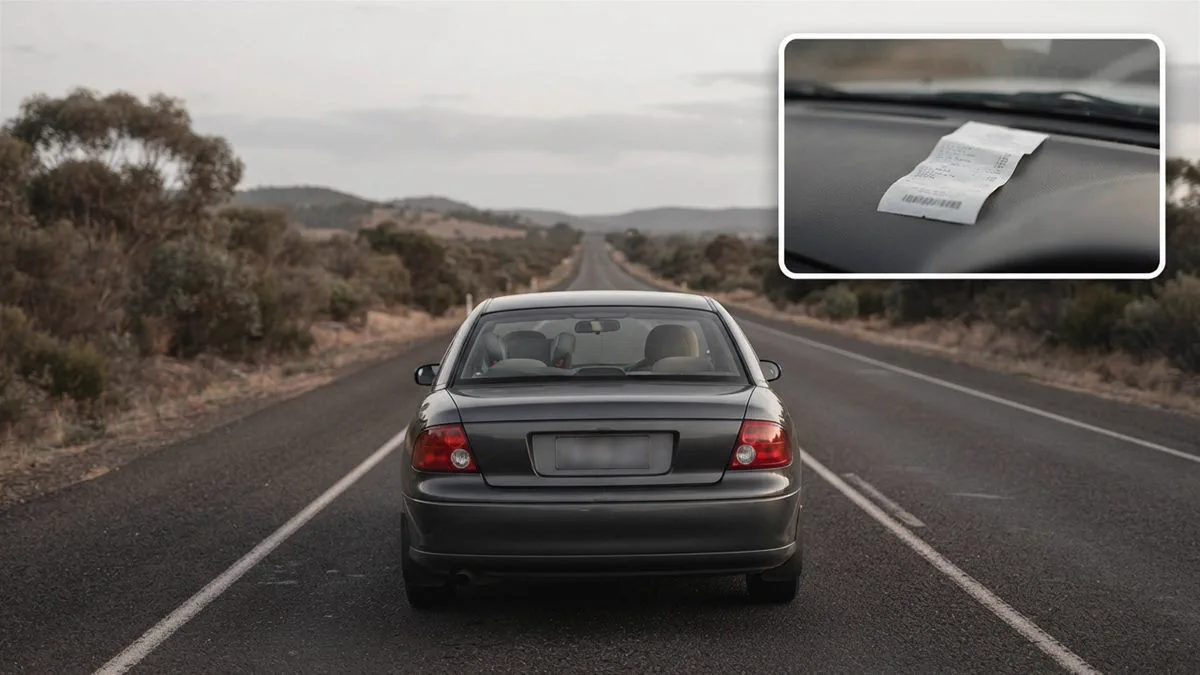
Parents separated by real distance. A parent who moved interstate for work, or whose ex-partner did. A parent flying children between capital cities for school holidays. A parent driving eleven hours each way, twice a month, on a modest income.
The formula makes no allowance for any of it. Two parents with identical incomes and identical care percentages are assessed identically, whether they live in the same suburb or two thousand kilometres apart. Reason 1 exists because that produces an obviously unfair result in some households.
Your adjusted taxable income × 5% = the floor the costs have to exceed
On an assessment built on $78,000, the costs have to exceed $3,900 a year before reason 1 can be considered at all. On $104,000, $5,200. The threshold rises with income, which means a higher earning parent needs proportionately larger costs to get through the door.
It is worth working the figure out before anything else. If the annual travel bill is under it, this ground is unavailable regardless of how genuine the expense is, and another ground would have to be found.
Food, clothes and entertainment are expressly excluded. Not weighed and found insufficient - excluded. The reasoning is that those are ordinary costs of having children with you, and the formula already accounts for them through the cost percentage.
This is where applications most often go wrong. An application totalling up everything a weekend costs - petrol, a motel, meals out, a trip to the zoo - will have most of it struck out, and the remainder may not clear the 5% floor.
If you care for the children at least 52 nights a year, travel is the only cost that can be considered under this reason. Accommodation and communication drop out.
The logic is that at 52 nights you are already credited with 24% of the children's costs through your cost percentage, and the scheme treats that credit as covering everything except the travel itself. Below 52 nights you are credited with nothing at all, so the other categories remain open.
Fifty-two nights is also the biggest step in the care table, which makes it worth knowing exactly which side of it you are on for two separate reasons at once.
The general process is that documents establishing both the arrangement and the cost are gathered before anything is lodged:
That last point is worth noting. This ground does not require a year of receipts before it can be run. A credible forward estimate of what the coming year will cost is accepted.
Reason 1 works by raising the costs of the children by the amount recognised. The parent who actually meets that cost is then credited with the whole of it, so their liability moves by their share of the increase less the whole of what they paid - which comes out as a reduction rather than an increase.
In practice the assessment falls by roughly the amount recognised multiplied by the other parent's share of the costs. On a household where the paying parent carries about half the child support percentage, recognising $5,200 of travel moves the assessment by somewhere around $2,300 a year.
That makes reason 1 one of the more valuable grounds in dollar terms, which is worth knowing given how rarely it is used.
Everything you send except Part A of the form is copied to the other parent, and travel applications necessarily contain a great deal about where you go and when. Remove your address, your workplace, the children's school and any vehicle registration from attachments before they go in.
The other parent responds and can apply for different changes of their own. Where their answer is going to be that the distance was your choice, it is worth addressing that in the application rather than waiting to respond to it - reason 1 does not require the distance to be anybody's fault, but the Registrar still has to be satisfied that a change would be just and equitable.
What each of the ten reasons actually needs covers the evidence rules in full, including the three kinds of material that are refused outright.
The report works out the floor on your own income, prices reason 1 against the other nine, and gives the rate per $1,000 recognised so you can scale it to your own travel bill.
Sign in to see your saved reports and your full report access.
It is free. Your reports are saved, so you never have to type your figures in again.
We will email you a link to set a new password. It works once and lasts an hour.
Pick something you will remember.
Get the full report to see what every option costs you, in order.
About us
Almost everybody meets the child support scheme at the worst possible moment. A relationship has ended, a care arrangement is being argued about, and a letter arrives with a figure on it and no working. That figure can run for years, often for more than a decade, and it is set at the point when neither parent has the time, the money or the calm to go and check it. A small weekly difference, the kind nobody thinks worth an argument, repeats every single week until the youngest child turns eighteen.
None of the rules are secret. The eight step formula is section 35 of the Child Support (Assessment) Act 1989. What the rules say children cost is a table in Schedule 1 of the same Act. The conversion from nights of care to a share of those costs is section 55C. The ten reasons an assessment can be departed from are section 117(2). The six figures that move every 1 January are published in the Child Support Guide at section 2.3.2, and the costs of the children table is on Services Australia's own website. Every one of them is free to read. What almost nobody ever sees is those rules applied to their own numbers, because they are spread across an Act, a schedule, a guide written for decision makers, and an annual indexation cycle nobody outside the field follows.
Child Support Calculator does one thing: it applies those published rules to your figures and shows you, in full, what they produce. All eight steps written out with your own numbers in every line and the section of the Act beside each one. Every legal option you have, priced on a single stated measure. All ten change of assessment reasons, separately. The assessment at every one of the 365 nights of care, so you can see exactly where the steps fall before you agree to an arrangement rather than four years after. And every year until your youngest turns 18, with the children ageing through the costs table as they go.
We do not tell you what to do, and we are not licensed to. Services Australia administers the child support scheme and is the only body that can tell you what your assessment actually is. If the figures on your assessment notice differ from what you type in here, the notice is what governs. Nothing on this site is legal or financial advice, no route on it is recommended over any other, and whether an application is worth making turns on evidence, on what it does to Family Tax Benefit, and on whether it is worth the conflict. None of that is arithmetic. The arithmetic is the part people are missing. If you want the opinion as well, here is who does what, and the support page lists the free helplines.
One more thing, because people ask. We never need a name, a Customer Reference Number, a tax file number, a bank detail or anything that identifies a child. None of them are part of the arithmetic, so none of them are collected. The name you can put on the report cover is optional, is printed there and nowhere else, and is never part of what the assistant is given.
Short version: we hold as little as we can, we never ask for the identifiers that matter most, and the calculation runs on your own device. The long version is below, because you are entitled to it.
This policy explains how XTO Pty. Ltd. (we, us, our) collects, holds, uses and discloses personal information, and how you can access, correct or complain about it. We handle personal information in accordance with the Privacy Act 1988 (Cth) and the Australian Privacy Principles (APPs).
It applies to calculatedchoices.com.au and to every email we send you. It does not apply to any third party site we link to.
We do not ask for, and you should never send us, your Medicare number, tax file number, tax file numbers, Customer Reference Numbers, bank account numbers, or any government identifier, bank account details or card number. The calculator does not need them. If you send one to us anyway we will delete it rather than store it.
We do not collect sensitive information as defined in the Privacy Act - health information, racial or ethnic origin, political or religious beliefs, sexual orientation, or criminal record. Where the calculator asks about care needs it asks about funding categories, never about a medical condition.
Information you give us
Information collected automatically
In your browser, on your device. The figures you type into the calculator are processed locally to produce your result. They are transmitted to us only if you choose to save a scenario to your account. If you never save one, we never receive them.
Two exceptions, and both are things you have to choose to do:
A paid report comes with an optional assistant you can ask questions about your own figures. It is the one part of this site that sends anything to a third party, so it is set out here in full.
It is entirely your choice, and it does nothing until you use it. Nothing is sent anywhere unless you open the assistant and ask a question. If you never open it, this section does not apply to you at all, and the rest of the report works exactly the same.
What is sent when you do ask
What is not sent
What travels is a set of amounts and categories. On its own it does not identify anybody, and we do not send anything alongside it that would.
Who processes it
The request is answered by Google's Gemini API, which processes it outside Australia - see sections 10 and 11. We do not train any model on your figures and we have no arrangement permitting anyone to do so; what Google does with data sent to its API is governed by its own terms, which we do not control.
How long it is kept
Because the assistant is optional, you can have the entire paid report without any of the above ever happening. Nothing in the report is withheld from somebody who never opens it.
We use the following, and nothing else:
You can clear or block these through your browser at any time. Clearing them will sign you out and reset your preferences; the site will otherwise work normally.
We use Google Analytics and Google Ads to measure how people find and use the site and whether our advertising is worth running. Where these are enabled, Google receives your IP address, device and browser information, the pages you viewed, and - when you complete a purchase - the order reference and the amount paid. Google may set its own cookies and may combine this with data it holds from other sources. Google's handling of that data is governed by its own privacy policy, not ours.
We do not sell your personal information, and we do not disclose it to data brokers, advertising networks other than as described above, a Customer Reference Number or any other government identifier, or anyone who might try to sell you something.
You can opt out of Google Analytics using Google's browser add-on, and you can adjust personalised advertising in your Google account settings.
Payments are processed by PayPal. Your card or account details are entered on PayPal's systems and are never transmitted to, seen by, or stored on our servers. We receive only the transaction reference, the amount, the status and the email address associated with the payment.
Some of these providers store or process data outside Australia, principally in the United States (Google, PayPal) and, depending on our email provider, in other countries. By using the site you acknowledge that we take reasonable steps to ensure overseas recipients handle your information consistently with the APPs, but that we cannot control and are not accountable for how an overseas recipient handles it once disclosed, and that you may not be able to seek redress in that jurisdiction.
The site runs entirely over HTTPS. Passwords are stored as salted PBKDF2 hashes, not as text anyone here can read. Access to the database is restricted to those who need it. No system is perfectly secure, and we cannot guarantee the security of information transmitted over the internet, but we take reasonable steps to protect it from misuse, interference, loss and unauthorised access, modification or disclosure.
If a data breach occurs that is likely to result in serious harm, we will notify you and the Office of the Australian Information Commissioner as required by the Notifiable Data Breaches scheme.
If you give us your email address for a free estimate we may follow up about the full report. Every commercial email we send identifies us and carries a functional unsubscribe link, as required by the Spam Act 2003 (Cth). We action unsubscribes immediately. You will still receive transactional email - receipts, access details and password resets - because those are not marketing.
Write to support@calculatedchoices.com.au. We will:
We will respond within 30 days and will not charge you for making a request. We may need to verify your identity first.
If you think we have breached the APPs, write to support@calculatedchoices.com.au with "Privacy complaint" in the subject line. We will acknowledge within 5 business days and respond substantively within 30 days.
If you are not satisfied with our response, you may complain to the Office of the Australian Information Commissioner: oaic.gov.au, 1300 363 992, or GPO Box 5288, Sydney NSW 2001.
The site is intended for any parent or carer with a child support assessment, or about to have one. It is not directed at children and we do not knowingly collect personal information from anyone under 18.
We may update this policy. The effective date at the top changes when we do. Where a change is material we will tell you by email or by notice on the site before it takes effect. Continuing to use the site after that means you accept the updated policy.
Privacy Officer
XTO Pty. Ltd. (ACN [ACN NOT SET])
support@calculatedchoices.com.au
Plain English, because the whole point is that you understand it. Section 6 is the one that matters most - please read it before you rely on anything here.
By using calculatedchoices.com.au (the site) or buying a pass you agree to these terms. If you do not agree, do not use the site. In these terms we, us and our mean XTO Pty. Ltd.; you means the person using the site or, where you use it on behalf of another person or an entity, both you and that person or entity.
You must be at least 18 and legally able to enter a contract. The site is intended for use in Australia and applies Australian law and the Child Support (Assessment) Act 1989 and the child support figures published each January only. If you use it from outside Australia you do so on your own initiative and are responsible for local compliance.
Child Support Calculator is an information and calculation service. It applies the Child Support (Assessment) Act 1989 and the child support figures published each January to figures you supply and reports what those rules produce, showing its workings and naming the fee schedule used.
It is not financial product advice, personal advice, legal advice, tax advice, accounting advice or legal or financial advice, and it is not a recommendation to acquire, dispose of or deal in any financial product.
You should obtain independent, licensed advice before acting. Any decision you make is yours.
We take considerable care to keep the rates current and the formulas right, and every report prints the schedule it was built on. Even so:
Always confirm before you act.
You acknowledge and agree that you are solely responsible for evaluating the output, for verifying it against official sources, for obtaining independent professional advice, and for every decision you make or do not make. We are not your adviser and no fiduciary or advisory relationship arises from your use of the site.
You are responsible for keeping your password confidential and for everything done under your account. Tell us immediately at support@calculatedchoices.com.au if you suspect unauthorised use. We may suspend or close an account we reasonably believe is being used in breach of these terms.
A report you export as a PDF or otherwise save remains yours to keep and to show to family, an adviser or Services Australia. That licence is personal and non‑commercial. It does not permit republication, resale, or use as part of a product or service you provide to others.
Our promise: if the calculator cannot properly model your circumstances, or something has gone wrong, write to us within 14 days of purchase and we will refund the pass. No form and no argument. We would rather refund you than have you rely on a number that does not fit.
This is a voluntary commercial guarantee offered in addition to, and it does not limit, your rights under the Australian Consumer Law. Refunds are made to the original payment method within five business days of us accepting the request.
You must not:
All content, code, calculation methodology, report design, text and branding on the site is owned by us or licensed to us and is protected by copyright and other laws. Legislated rates and government data are not owned by anyone; our expression, arrangement and implementation of them is. Nothing in these terms transfers ownership to you.
We aim to keep the site available but do not guarantee it will be uninterrupted, timely, secure or error free. We may modify, suspend or discontinue any part of it, and may perform maintenance, at any time. If we permanently discontinue the service while your pass is running, we will refund the unused portion.
The site relies on third party services including PayPal, Google and our hosting and email providers, and links to third party sites and government resources. We are not responsible for those services or sites, their availability, their content or their terms.
Our goods and services come with guarantees that cannot be excluded under the Australian Consumer Law. For major failures with the service, you are entitled to cancel your service contract with us and to a refund for the unused portion, or to compensation for its reduced value. You are also entitled to be compensated for any other reasonably foreseeable loss or damage. If the failure does not amount to a major failure, you are entitled to have problems with the service rectified in a reasonable time and, if this is not done, to cancel your contract and obtain a refund for the unused portion of the contract.
Nothing in these terms excludes, restricts or modifies any consumer guarantee, right or remedy conferred by the Australian Consumer Law or any other law which cannot lawfully be excluded, restricted or modified. If any part of these terms would do so, that part does not apply.
Subject always to section 15, and to the maximum extent permitted by law:
You agree that this allocation of risk is reasonable given the price of the service and that the service is information rather than advice.
Our liability is reduced to the extent your loss is caused or contributed to by you, including by entering incorrect figures, by failing to verify output against official sources, or by failing to obtain independent advice.
To the maximum extent permitted by law, you indemnify us against any claim, loss, liability, cost or expense (including reasonable legal costs) arising from your breach of these terms, your misuse of the site, or your provision of the site's output to a third party who relies on it. This does not apply to the extent the claim arises from our own breach, negligence or wilful misconduct.
You may stop using the site at any time. We may suspend or terminate your access immediately if you breach these terms. Sections 4, 5, 6, 9, 12, 15, 16, 17, 19 and 20 survive termination.
Our Privacy Policy forms part of these terms and explains how we handle personal information.
These terms are governed by the laws of New South Wales, Australia. You and we submit to the non‑exclusive jurisdiction of the courts of New South Wales and the courts entitled to hear appeals from them.
XTO Pty. Ltd. (ACN [ACN NOT SET])
support@calculatedchoices.com.au