"I just want to know if 40% is fair."
Somebody has said a figure and it is sitting there. You cannot tell whether it is reasonable, and the only way to find out costs money you were not planning to spend on finding out.
Free, and nothing changes on this page. One email, then only if the rates change or a deadline is close. Unsubscribe in one click.
Every calculation is unlocked. Change one figure and run it again as many times as you like — nothing is deducted, nothing counts down, and none of it expires.
Before you sign anything
You have separated, somebody has said a number out loud, and you have no idea whether it is generous, insulting or about right. Nobody will tell you — not the bank, not your former partner's solicitor, and not the internet, which mostly says "it depends".
A family lawyer will work out your range, at $440 to $660 an hour, once you have an appointment. This does it in about six minutes — the four steps in the Act, on your own figures, with every factor sized so you can see what is moving it.
A rough guide only. It splits the superannuation evenly and assumes nothing was brought in at the start — the full calculator asks properly, and both of those move the answer a long way.
If this is you
The rules are public. They are also written as a discretion rather than a formula, spread across a statute and several thousand judgments, and there is no official document anywhere that turns them into a number for you.
Somebody has said a figure and it is sitting there. You cannot tell whether it is reasonable, and the only way to find out costs money you were not planning to spend on finding out.
Contributions. Future needs. Just and equitable. Add-backs. Every one of them is a real thing with real money attached, and every one of them is written in language nobody uses outside a courtroom.
Your sister got 70%. Your friend at work says it is always half. Somebody on the internet says superannuation does not count. One of those was true in 1998, one was a different case entirely, and one has never been true.
Yes, and that is the point of it. Consent orders are final, and the whole reason to know the range beforehand is that there is no version of this where you get to find out afterwards and change your mind.
You put in what the two of you own, owe and earn. We run the four steps the Family Law Act actually sets out, size every factor in percentage points, and give you the range. No appointment, no retainer, no letter arriving in a fortnight, and nobody rings you.
Six minutes, no card, and you will know the range. It costs nothing.
The loss
Eighteen years married, two children at home, one of them back at work three days a week on $55,000 while the other earns $130,000. A — pool once the house is sold and the debts come off.
That household is invented and the figures beside it are computed live, on this page, by the same engine the paid report uses — reload and they are worked out again. What is not invented is the method: section 79 of the Family Law Act 1975 as rewritten on 10 June 2025, applied in the order the Act applies it.
The alternatives
| Guess what most people do |
A family lawyer an advice conference |
This calculator Right here, tonight |
|
|---|---|---|---|
| What it costs | Nothing now, sometimes six figures later |
$440–$660 an hour | $249 |
| How long it takes | An afternoon of worrying | An appointment, then a letter | About six minutes |
| Every factor sized in points | Usually described, rarely itemised | ||
| Advice on your own case | |||
| Working shown | Usually not |
The clock
Property settlement runs on deadlines, and past one of them the choice gets made for you. None of these is our deadline: they are in the Act and in the fees regulations, and you can go and read all three.
Section 44(5). Two years from the day the relationship broke down, and the clock starts on the separation rather than on any paperwork. After that you need the court's permission to apply at all, and it is not given as a matter of course. Reaching an agreement does not stop the clock — only filing something does. Read the rules.
Section 44(3). There is no deadline at all until a divorce order takes effect — and then exactly twelve months. Which means applying for the divorce first, before the property is sorted out, starts a clock that did not previously exist. The divorce is a completely separate application with its own fee of —, and it divides nothing.
The Family Law (Fees) Regulations 2022 index the whole schedule on 1 July each year. The figures in this report are the — schedule, and a defended matter running past a 1 July costs more on the other side of it — the setting down fee, the daily hearing fee, all of it. It moves the cost of every route and none of the percentages.
The report
The free estimate gives you the range and tells you which of the statutory factors are switched on for you. This is the part that says how big each one is, what happens if any of them is wrong, and what every way of settling actually leaves you. Up to fourteen sections and eleven charts, on your own figures, with every working shown so you can check it or argue with it.
See a real one, free — an invented household run all the way through, with the open half exactly as a customer sees it, and the assistant live on it for two questions.
How it works
If you can read a bank statement you can use this. Simple mode asks about nine questions. Detailed also asks about money either of you brought in, inheritances, and anything that was deliberately lost — which move a range further than anything else on the form.
The house, what is owing on it, savings, debts, both superannuation balances, both incomes, ages, and who the children live with. We never ask for your name, your address, an account number or a court file number, and nothing you type leaves your browser unless you buy a report.
Your pool itemised, your share as a percentage range with both ends of it, and every statutory factor that is switched on for you, named. That is the whole free result and it is a real answer on its own.
$249 opens the full report: every factor in percentage points, what the range becomes if one of them is wrong, and every way of settling ranked on what reaches you. PDF included, ready to take to a lawyer.
Sections 79 and 90SM as rewritten by the Family Law Amendment Act 2024, in force from 10 June 2025. Court fees are the Federal Circuit and Family Court's published schedule from 1 July 2026.
Nothing is a black box. Every percentage point in the report carries the factor that produced it, the section of the Act it comes from, and the sentence explaining it.
We are not lawyers and we are not licensed to tell you what to do. There is no formula in the Act — there is a discretion — which is why the answer is a range and why nobody should ever present it as a number.
If the report does not apply to your circumstances, tell us what went wrong within 14 days and we refund you in full.
Included with the report
Every report comes with an assistant that has read your report — your pool, your factors, your range — and answers questions about it in plain English. Not a search box and not a help page. It knows what your report says because it has been given it.
An example of the kind of answer it gives, on the sample report's figures.
Pricing
One payment, no expiry, nothing to renew, and we never keep your card. It opens the whole report and lets you run the figures again as often as you like — which matters, because a valuation changes and an offer changes and both of those change the answer.
Prices in Australian dollars. Paid securely through PayPal — card or PayPal balance, no account needed. See a sample report before you decide.
Questions
No. There is no legislated starting point of half, and the published research does not show one either. In the largest Australian study of separated parents, mothers received 57% of the property on average; in an analysis of 200 court decisions the average was 54% to mothers. Both are averages across households nothing like each other, which is exactly why a range on your own figures is worth more than either.
In four steps, set out in section 79 of the Family Law Act 1975 and restructured by the Family Law Amendment Act 2024 from 10 June 2025. Identify and value everything you both own and owe. Assess what each of you contributed. Assess where each of you stands now and in the future. Then ask whether the result is just and equitable. There is no formula and no presumption of half, and what comes out is a range rather than a number.
It goes in the pool as property, and it has since 2002. A court order or a binding financial agreement can require a fund to move part of one balance into the other person's fund. It does not become cash — it stays superannuation and stays locked up under the ordinary rules. A couple who divide the house evenly and each keep their own super have divided part of the pool and called it all of it.
Since 10 June 2025 the Act says so expressly. Section 79(4)(ca) requires the effect of family violence on a party's ability to contribute to be taken into account, and section 79(5)(a) requires its effect on that party's current and future circumstances to be taken into account as well. Section 4AB now lists economic and financial abuse — controlling money or superannuation, sabotaging employment, building debt in somebody else's name — as examples of family violence.
If you were living together and not married, two years from the day you separated — section 44(5). If you were married, there is no deadline at all until a divorce order takes effect, and then twelve months from that day — section 44(3). Past either limit you need the court's permission to apply, and it is not given as a matter of course. Reaching an agreement does not stop the clock; only filing something does.
Because the pathway is public, structured and published in thousands of judgments, and arithmetic scales. Published fixed fees for property consent orders run from $2,000 to $4,400, and senior family lawyers publish hourly rates of $440 to $660. What that buys and this does not is advice on your own case from somebody licensed to give it.
Consent orders are final. So is a binding financial agreement. There is no version of this where you find out afterwards what the range was and go back — that is the whole point of them, and it is why every part of this decision that can be worked out beforehand should be. Six minutes now is the cheapest six minutes of the entire process.
No card. No sign up. Your range on the next screen.
Nobody is going to hand you the range. It takes about six minutes to work out your own.
Most calculators split your assets down the middle and call it an answer. This one runs the four steps the Act actually sets out — pool, contributions, future needs, just and equitable — and gives you the range, because a range is what the law produces.
Rules as at —.
Your estimate
Your range is free and it is on this page. What you have not seen is how big each factor is.
You can provide a different email to use as your login - or the PayPal one
And you can ask it questions. Your report comes with an assistant that has read it and explains any figure in plain English — if you want it. It is given the amounts on your report, never your name or your email, and the conversation stays in your browser.
Your range, your pool and the link back to everything you entered, so you can pick this up on a laptop or show it to somebody. One email, and the subject line gives nothing away on a lock screen.
One email, then only if the figures change or a deadline is close. Unsubscribe in one click. We never sell your address.
Before you sign anything
People sign consent orders at 40% when the range was 55 to 65, and consent orders are final. Other people spend $25,000 at a hearing to move a gap smaller than that. This report prices every factor in percentage points and works out the offered percentage at which each way of settling stops being worth what it costs.
Yes, it is included, and using it is entirely your choice. It sits behind one button on your report and does nothing until you press it — nothing in the report is held back from somebody who never opens it.
When you do ask it something, what it receives is the figures on your report: amounts and categories. Not your name, not your email address, not your account, and never a Medicare number, tax file number or bank detail — we do not hold those in the first place. The name you can put on the report cover is optional and is not part of what it is given. The conversation stays in your browser tab and is gone when you close it, and we record that a question was asked without recording what it said.
Section 5 of the privacy policy sets out exactly what does and does not travel, including who processes it.
No. You pay once and the access is yours. There is no subscription and nothing renews. PayPal handles the payment, so we never even see your card number.
No, and it is not a prediction of what a court would order. We are not lawyers. What this does is apply the four steps in section 79 of the Family Law Act to the figures you enter and show what they produce, with every working visible. There is no formula in the Act — there is a discretion — which is why the answer is a range and why nobody honest would give you a single number. It is a far better thing to walk into a lawyer's office holding than a blank page.
The Property Settlement Calculator provides information, not legal advice. We are not licensed to give personal financial advice and we never tell you which option to pick. What we do is apply the published rules to the figures you enter and show you what they produce, with every working visible. Your actual division is decided by one of two things and neither of them is us: an agreement you and your former partner both sign and have made into consent orders, or a judge exercising a discretion under the Family Law Act 1975. Get advice on your own case from a family lawyer before you sign anything.
Pay once and the full report opens on the figures you already entered. Nothing renews and no card is kept on file.
You can provide a different email to use as your login - or the PayPal one
Worked examples
Nine separated people, invented but ordinary, run through the same engine as the paid report. Not one figure on this page is typed in: the inputs are written down and the calculator works out the rest when you load the page, so it cannot go stale while the rules move underneath it. Six of them stand to lose six figures by assuming half. Three should stop, sign, and spend nothing.
People say "it's 50/50" the way they say the earth goes round the sun. It is not in the Family Law Act, it has never been in it, and it is not what the published research finds either. What the Act sets out is four steps and a discretion. Half is where a lot of settlements happen to land, which is a different thing entirely.
After contributions comes an adjustment for age, health, income, earning capacity and who the children live with. Everybody inside the system calls them "the section 75(2) factors", almost nobody outside it has heard of them, and they decide more settlements than contributions do.
Everything below is those two facts in real dollars, for nine different households. Worked out on the Family Law Act as it has stood since current.
Your own range depends on the size of your pool, how long you were together, what either of you brought in, the gap between two incomes, who the children live with, and half a dozen things besides. Change any one of them and the answer moves. Six minutes, no card.
Every way of settling the same pool, and what each one reaches Jo after the cost of getting there. Same pool, same facts — the difference is only in how far it is taken and what that costs. Ranked on that one measure, if the settlement lands at the position named on that row. Open Show Details on any of them — the panels are live on this page.
The four steps in section 79 of the Family Law Act 1975, run on Jo's figures, against the rules as they have stood since 10 June 2025.
Her range is 60% to 70%. An even split would be $468,120, which is $140,599 below the middle of the range her own figures produce.
What is on the table is 47%, or $440,033. That is below the bottom of the range, by $121,711.
Everything either of them owns, less everything either of them owes. One pool, not two piles: whose name something is in makes no difference to whether it goes in.
| Item | Amount |
|---|---|
| The home | $840,000 |
| Less the mortgage on it | −$310,000 |
| Everything else they both own | $55,000 |
| Less everything else they both owe | −$34,000 |
| Her superannuation | $118,000 |
| His superannuation | $296,000 |
| The pool, before the cost of dividing it | $965,000 |
| Less agent commission at 2.65% on $840,000 | −$22,260 |
| Less marketing and conveyancing on the sale | −$6,500 |
| The net pool everything below is a share of | $936,240 |
Equal, then what contributions do to that, then what current and future circumstances do, then a check on the whole answer. Each step is a departure from the one before it, and each departure has a reason attached.
Step 2, contributions: +3.0 points, landing at 53.0%. Section 79(4). Financial, non-financial, and as a homemaker and parent — the Act treats all three as capable of being worth the same, which is why a household with one earner and one homemaker usually comes out at or near equal here rather than badly unequal.
Step 3, current and future circumstances: +12.0 points. Section 79(5), which everybody still calls the section 75(2) factors. Age, health, income, what each of them can realistically earn from here, and who the children live with. This is the step that decides most cases and the one most people have never heard of.
Each matter the Act names, sized, and pointing one way or the other. A plus moves the share towards Jo; a minus moves it towards her former partner. Neither is good or bad — they are directions.
| Factor | Section | Points |
|---|---|---|
| Running the household and raising the children Step 2 — contributions | s 79(4) | +3.0 |
| Caring for the children, and housing them Step 3 — current and future circumstances | s 79(5) | +4.0 |
| Income and the capacity to earn Step 3 — current and future circumstances | s 79(5) | +5.2 |
| How long it lasted, and what that did to a career Step 3 — current and future circumstances | s 79(5) | +2.8 |
Every row except the first is priced at the middle of Jo's range, because no route can be shown to produce a better percentage than another. What differs between them is the cost.
Everything above is real arithmetic on a fictional household. Run yours and this half opens on your own figures.
And you can ask it questions. Every report comes with an assistant that has read your report and explains any figure in it in plain English. Using it is entirely your choice, it does nothing until you press the button, and it is given the amounts on your report and never your name, your email, your account or your former partner's name.
That is Jo's answer. Yours takes about six minutes and costs nothing.
The link may have already been used. If you are still getting emails, write to us and we will stop them by hand.
Guides
Written for somebody who separated three weeks ago and has never had a reason to know any of this. Every guide names the section of the Family Law Act it is about, quotes the published research rather than an opinion, and shows the working — which is the part the official pages leave out, because the official pages are written for people who already know.
Reading is useful. Knowing your own range before anybody names a figure is better.
What moves the number
Since 10 June 2025 the Family Law Act says it expressly. Section 79(4)(ca) requires the effect of family violence on a party's ability to contribute to be taken into account, and section 79(5)(a) requires its effect on that party's current and future circumstances to be taken into account as well. Economic and financial abuse is now named in the Act as an example of family violence.
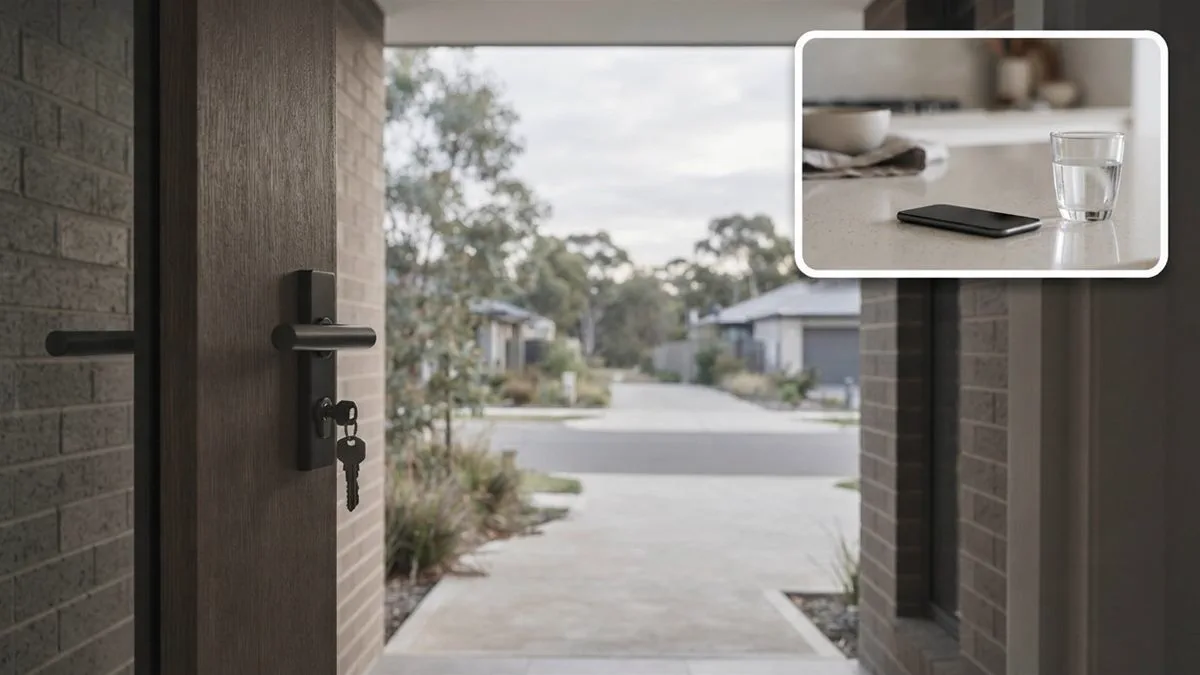
For nearly thirty years the leading authority was Kennon v Kennon, which recognised that where one party's violent conduct made the other party's contributions significantly more arduous, that could be reflected in the contributions assessment. It was real law and it was used.
It was also hard to run. It required a party to raise it, to prove a course of conduct, to prove a discernible effect on their capacity to contribute, and to do all of that in a forum they were often already frightened of. Reviews of the family law system repeatedly found it under-used relative to the prevalence of family violence among separating couples.
The Family Law Amendment Act 2024 restructured section 79 and put family violence into the statute in two places rather than leaving it to be argued.
Section 79(4)(ca) sits in the contributions list. It requires the court to consider the effect of any family violence, to which one party has subjected or exposed the other, on that other party's ability to make the contributions the rest of the list describes — financial, non-financial, and as a homemaker and parent.
Section 79(5)(a) sits at the top of the current and future circumstances list. It requires the court to consider the effect of family violence on the other party's current and future circumstances.
The distinction between the two is worth holding onto, because they ask different things. The first is about what happened at the time: was contributing made harder, was working made harder, was running a household under those conditions harder. The second is about the position somebody is in now: work interrupted, housing lost, health affected, and what it costs to start again.
The equivalent provisions for de facto couples are in sections 90SM(4) and 90SF(3).
The other change is in section 4AB, which defines family violence. It now sets out examples of behaviour that may constitute economic or financial abuse, including:
Naming these matters more than it might sound. Economic abuse has always been the hardest kind to raise, because it leaves no marks and because a great many people experiencing it did not have a word for it. There is a considerable difference between arguing that controlling behaviour about money should count as family violence and pointing at a subsection that says it does.
It is not a return to fault. Australia has had no-fault divorce since 1975, and behaving badly during a relationship is not, by itself, a reason to get less of the property. What these provisions do is narrower and more specific: they ask about the financial consequence of family violence — on the ability to contribute, and on where somebody now stands.
It is also not a fixed uplift. There is no percentage in the Act and there is not going to be one. This is the newest part of the whole pathway, the cases applying the new wording are still working their way through, and any estimate of its size should be conservative and should say that it is.
It asks, in a step that can be skipped entirely, whether there has been family violence, who it was against, how much it affected things, and whether there was economic abuse. Those answers feed two separate factors — one at contributions and one at future needs — sized conservatively, and the report prints both alongside every other factor and says plainly that this is the factor whose size is least settled.
Nothing entered leaves your browser unless you choose to buy a report, and even then it is your figures and never your name or your former partner's.
1800RESPECT — 1800 737 732 — is free, confidential and open twenty four hours a day, every day. You can also text 0458 737 732 or chat online. In an emergency, ring 000.
The Family Relationship Advice Line on 1800 050 321 provides free information about separation, including free legal advice through its legal advice service. Every state and territory has a Legal Aid commission, and family law is the largest thing they do.
The calculator applies both provisions as separate factors and sizes them conservatively, and the whole step can be skipped if you would rather not answer it.
Your saved reports and your access are waiting.
Free. It saves your scenarios so you never re-type a figure.
We will email you a link that works once and expires in an hour.
Pick something you will remember.
Unlock the full report to see every option priced and ranked.
About
You have separated. Somewhere in the next few months the two of you will divide everything you own between you, and whatever you sign will be final. It is very likely the largest financial decision either of you will ever make, it is being made in the worst few months of your life, and the one thing that would make it easier — a straight answer to "what is my share actually worth?" — is the one thing nobody will give you.
The rules are not secret. They are in sections 79 and 90SM of the Family Law Act 1975, rewritten by the Family Law Amendment Act 2024 and in force since 10 June 2025, and they are applied in several thousand published judgments a year. What they are not is usable. There is no formula in the Act — there is a discretion over a list of matters — so the answer lives in how those matters are weighed, and that is spread across a statute, a body of case law and a research literature that almost nobody separating has any reason to have read.
The Property Settlement Calculator does one thing: it applies those published rules to your figures, in the order the Act applies them, and shows you in full what they produce. Every factor sized in percentage points. What the range becomes if any one of them is wrong. Every way of settling priced on what actually reaches you after the cost of getting there. All of the working visible, so you can check it, argue with it, or take it to somebody who can. The answer is a range, because the law produces a range — a calculator that gave you a single number would be inventing a precision the Act does not have.
We do not tell you what to do. We are not licensed to, and frankly the arithmetic is the part people are missing — not the opinion. Here is what a family lawyer actually charges, and what each way of settling costs, if you decide you want that as well. For a contested matter it is money well spent, and this report is a better thing to walk into that appointment holding.
Short version: we hold as little as we can, we never ask for the identifiers that matter most, and the calculation runs on your own device. The long version is below, because you are entitled to it.
This policy explains how XTO Pty. Ltd. (we, us, our) collects, holds, uses and discloses personal information, and how you can access, correct or complain about it. We handle personal information in accordance with the Privacy Act 1988 (Cth) and the Australian Privacy Principles (APPs).
It applies to calculatedchoices.com.au and to every email we send you. It does not apply to any third party site we link to.
We do not ask for, and you should never send us, your Medicare number, tax file number, Centrelink Customer Reference Numbers, bank account numbers or court file numbers, bank account details or card number. The calculator does not need them. If you send one to us anyway we will delete it rather than store it.
We do not collect sensitive information as defined in the Privacy Act — health information, racial or ethnic origin, political or religious beliefs, sexual orientation, or criminal record. Where the calculator asks about care needs it asks about funding categories, never about a medical condition.
Information you give us
Information collected automatically
In your browser, on your device. The figures you type into the calculator are processed locally to produce your result. They are transmitted to us only if you choose to save a scenario to your account. If you never save one, we never receive them.
Two exceptions, and both are things you have to choose to do:
A paid report comes with an optional assistant you can ask questions about your own figures. It is the one part of this site that sends anything to a third party, so it is set out here in full.
It is entirely your choice, and it does nothing until you use it. Nothing is sent anywhere unless you open the assistant and ask a question. If you never open it, this section does not apply to you at all, and the rest of the report works exactly the same.
What is sent when you do ask
What is not sent
What travels is a set of amounts and categories. On its own it does not identify anybody, and we do not send anything alongside it that would.
Who processes it
The request is answered by Google's Gemini API, which processes it outside Australia — see sections 10 and 11. We do not train any model on your figures and we have no arrangement permitting anyone to do so; what Google does with data sent to its API is governed by its own terms, which we do not control.
How long it is kept
Because the assistant is optional, you can have the entire paid report without any of the above ever happening. Nothing in the report is withheld from somebody who never opens it.
We use the following, and nothing else:
You can clear or block these through your browser at any time. Clearing them will sign you out and reset your preferences; the site will otherwise work normally.
We use Google Analytics and Google Ads to measure how people find and use the site and whether our advertising is worth running. Where these are enabled, Google receives your IP address, device and browser information, the pages you viewed, and — when you complete a purchase — the order reference and the amount paid. Google may set its own cookies and may combine this with data it holds from other sources. Google's handling of that data is governed by its own privacy policy, not ours.
We do not sell your personal information, and we do not disclose it to data brokers, advertising networks other than as described above, your former partner, their lawyer, or anybody else involved in your matter, or anyone who might try to sell you something.
You can opt out of Google Analytics using Google's browser add-on, and you can adjust personalised advertising in your Google account settings.
Payments are processed by PayPal. Your card or account details are entered on PayPal's systems and are never transmitted to, seen by, or stored on our servers. We receive only the transaction reference, the amount, the status and the email address associated with the payment.
Some of these providers store or process data outside Australia, principally in the United States (Google, PayPal) and, depending on our email provider, in other countries. By using the site you acknowledge that we take reasonable steps to ensure overseas recipients handle your information consistently with the APPs, but that we cannot control and are not accountable for how an overseas recipient handles it once disclosed, and that you may not be able to seek redress in that jurisdiction.
The site runs entirely over HTTPS. Passwords are stored as salted PBKDF2 hashes, not as text anyone here can read. Access to the database is restricted to those who need it. No system is perfectly secure, and we cannot guarantee the security of information transmitted over the internet, but we take reasonable steps to protect it from misuse, interference, loss and unauthorised access, modification or disclosure.
If a data breach occurs that is likely to result in serious harm, we will notify you and the Office of the Australian Information Commissioner as required by the Notifiable Data Breaches scheme.
If you give us your email address for a free estimate we may follow up about the full report. Every commercial email we send identifies us and carries a functional unsubscribe link, as required by the Spam Act 2003 (Cth). We action unsubscribes immediately. You will still receive transactional email — receipts, access details and password resets — because those are not marketing.
Write to support@calculatedchoices.com.au. We will:
We will respond within 30 days and will not charge you for making a request. We may need to verify your identity first.
If you think we have breached the APPs, write to support@calculatedchoices.com.au with "Privacy complaint" in the subject line. We will acknowledge within 5 business days and respond substantively within 30 days.
If you are not satisfied with our response, you may complain to the Office of the Australian Information Commissioner: oaic.gov.au, 1300 363 992, or GPO Box 5288, Sydney NSW 2001.
The site is intended for separated people working out what a property settlement is likely to be worth. It is not directed at children and we do not knowingly collect personal information from anyone under 18.
We may update this policy. The effective date at the top changes when we do. Where a change is material we will tell you by email or by notice on the site before it takes effect. Continuing to use the site after that means you accept the updated policy.
Privacy Officer
XTO Pty. Ltd. (ACN [ACN NOT SET])
Level 1, 457 Elizabeth Street, Surry Hills NSW 2010
support@calculatedchoices.com.au
Plain English, because the whole point is that you understand it. Section 6 is the one that matters most — please read it before you rely on anything here.
By using calculatedchoices.com.au (the site) or buying a pass you agree to these terms. If you do not agree, do not use the site. In these terms we, us and our mean XTO Pty. Ltd.; you means the person using the site or, where you use it on behalf of another person or an entity, both you and that person or entity.
You must be at least 18 and legally able to enter a contract. The site is intended for use in Australia and applies Australian law and the Family Law Act 1975 and the published research on settlement outcomes only. If you use it from outside Australia you do so on your own initiative and are responsible for local compliance.
Property Settlement Calculator is an information and calculation service. It applies the Family Law Act 1975 and the published research on settlement outcomes to figures you supply and reports what those rules produce, showing its workings and naming the fee schedule used.
It is not financial product advice, personal advice, legal advice, tax advice, accounting advice or legal advice, and it is not a recommendation to acquire, dispose of or deal in any financial product.
You should obtain independent, licensed advice before acting. Any decision you make is yours.
We take considerable care to keep the rates current and the formulas right, and every report prints the schedule it was built on. Even so:
Always confirm before you act.
You acknowledge and agree that you are solely responsible for evaluating the output, for verifying it against official sources, for obtaining independent professional advice, and for every decision you make or do not make. We are not your adviser and no fiduciary or advisory relationship arises from your use of the site.
You are responsible for keeping your password confidential and for everything done under your account. Tell us immediately at support@calculatedchoices.com.au if you suspect unauthorised use. We may suspend or close an account we reasonably believe is being used in breach of these terms.
A report you export as a PDF or otherwise save remains yours to keep and to show to family, an adviser or family lawyer. That licence is personal and non‑commercial. It does not permit republication, resale, or use as part of a product or service you provide to others.
Our promise: if the calculator cannot properly model your circumstances, or something has gone wrong, write to us within 14 days of purchase and we will refund the pass. No form and no argument. We would rather refund you than have you rely on a number that does not fit.
This is a voluntary commercial guarantee offered in addition to, and it does not limit, your rights under the Australian Consumer Law. Refunds are made to the original payment method within five business days of us accepting the request.
You must not:
All content, code, calculation methodology, report design, text and branding on the site is owned by us or licensed to us and is protected by copyright and other laws. Legislated rates and government data are not owned by anyone; our expression, arrangement and implementation of them is. Nothing in these terms transfers ownership to you.
We aim to keep the site available but do not guarantee it will be uninterrupted, timely, secure or error free. We may modify, suspend or discontinue any part of it, and may perform maintenance, at any time. If we permanently discontinue the service while your pass is running, we will refund the unused portion.
The site relies on third party services including PayPal, Google and our hosting and email providers, and links to third party sites and government resources. We are not responsible for those services or sites, their availability, their content or their terms.
Our goods and services come with guarantees that cannot be excluded under the Australian Consumer Law. For major failures with the service, you are entitled to cancel your service contract with us and to a refund for the unused portion, or to compensation for its reduced value. You are also entitled to be compensated for any other reasonably foreseeable loss or damage. If the failure does not amount to a major failure, you are entitled to have problems with the service rectified in a reasonable time and, if this is not done, to cancel your contract and obtain a refund for the unused portion of the contract.
Nothing in these terms excludes, restricts or modifies any consumer guarantee, right or remedy conferred by the Australian Consumer Law or any other law which cannot lawfully be excluded, restricted or modified. If any part of these terms would do so, that part does not apply.
Subject always to section 15, and to the maximum extent permitted by law:
You agree that this allocation of risk is reasonable given the price of the service and that the service is information rather than advice.
Our liability is reduced to the extent your loss is caused or contributed to by you, including by entering incorrect figures, by failing to verify output against official sources, or by failing to obtain independent advice.
To the maximum extent permitted by law, you indemnify us against any claim, loss, liability, cost or expense (including reasonable legal costs) arising from your breach of these terms, your misuse of the site, or your provision of the site's output to a third party who relies on it. This does not apply to the extent the claim arises from our own breach, negligence or wilful misconduct.
You may stop using the site at any time. We may suspend or terminate your access immediately if you breach these terms. Sections 4, 5, 6, 9, 12, 15, 16, 17, 19 and 20 survive termination.
Our Privacy Policy forms part of these terms and explains how we handle personal information.
These terms are governed by the laws of New South Wales, Australia. You and we submit to the non‑exclusive jurisdiction of the courts of New South Wales and the courts entitled to hear appeals from them.
XTO Pty. Ltd. (ACN [ACN NOT SET])
Level 1, 457 Elizabeth Street, Surry Hills NSW 2010
support@calculatedchoices.com.au