Full access is live

Welcome back

Every calculation is unlocked. Change a date, a price or an assumption and re-run it as many times as you like — nothing is deducted, nothing counts down, and none of it expires.

Your access Unlimited No expiry, nothing to renew

Good to know

All guides

Your account

Access and orders

Before you sign the contract

Don't lose over $100,000. We'll show you your main residence exemption options.

You lived in it. Then you moved out, rented it to somebody else, and now you are selling. Somewhere in those dates is the answer to whether you owe nothing or you owe six figures — and nobody in the sale is going to raise it with you.

A registered tax agent works it out for $1,500 to $4,000, over weeks, and usually after the contract is already signed. We do it in three minutes — the day count, the cost base, and every lawful treatment of the sale priced side by side.

  • Free estimate. No card, no sign up
  • Full report $249 — a tax agent charges $1,500+
  • Built on the 2026–27 income year tax rates
30 second estimate

Three questions about your old home:

$
$
Your gain $— before the exemption
You could lose $—

A rough guide only. It assumes you lived in it for four years before renting it out and have $110,000 of other income in the year you sell. The full calculator asks for every one of those properly.

If this is you

If none of this makes sense,
that is not your fault.

The rules are in one subdivision of one Act, they are written for administrators, and the two that matter most have no form to lodge and no letter to trigger them. Nobody in a property sale is obliged to mention either one.

"The agent wants an answer by Friday."

An offer is on the table and the paperwork is being drawn up. Whatever the tax consequence turns out to be, it is fixed the moment somebody signs — and it will not be worked out until a return is prepared next winter.

"What even is a cost base?"

Cost base, apportionment, the third element, the absence choice, the market value substitution rule. Five terms, all real, all with figures behind them, none of them in language anybody outside a tax practice uses.

"My brother said six years, so I'm fine."

Six years is real, and it is six years per absence, and only while the place is earning rent, and only if the choice is actually made on the return. Four conditions, and the version that gets passed around the family has none of them.

"Am I about to hand over a year's salary?"

On a home bought fifteen years ago in a capital city the assessable gain is routinely six figures, and it lands on top of whatever else is earned that year. The honest answer is that it depends entirely on four dates.

So we built the thing that was missing.

You put in the dates and the two prices. We count the days, build the cost base element by element, apply every rule that is in play, and put every lawful way of reporting the same sale in order. No appointment, no engagement letter, and nothing to sign.

The ATO won't tell you It publishes the rules and it will give a binding private ruling on facts you set out. What it does not do is look at your dates unprompted and point out that a choice you have never heard of was worth six figures.
The agent and the conveyancer won't tell you One sells the house and one transfers the title. Neither is licensed to advise on tax, neither sees your ownership history, and the contract date they set for their own convenience is the date that decides which tax year the gain lands in.
A tax agent will — for $1,500 to $4,000 And for some people that is exactly the right call, because they can advise and we cannot. Most of that fee is reconstructing the timeline and doing the arithmetic, and it usually happens after the contract is signed.

Three questions, thirty seconds, and you will know roughly where you stand. It costs nothing.

The loss

Same house. Same buyer. Same day.
$115,493 apart.

Dan and Priya bought a Marrickville terrace in 2011, lived in it for three years, moved to the Central Coast and rented it out. In November 2026 they sell it for $2,050,000. Three lawful ways of reporting that sale can be priced on the rules as they stand, four more turn on which side of 1 July 2027 they sign, and nobody has to tell them which is which.

Guessed

The return nobody thought about

  • Reported the gain from the day they moved out, because that is what it looks like you do
  • Never made the absence choice — there is no form, so nothing prompted it
  • 100% of the gain assessable across the whole ownership period
  • $525,540 added to their income, halved by the discount, taxed at the top margin
Capital gains tax $236,995
Worked it out

The return that counted the days

  • Made the six-year absence choice under section 118-145, on the same return
  • 2,192 of the 4,536 days in the ownership period covered by it
  • Cost base rebuilt on the market value rule, at what it was worth the day it was first rented
  • 51.7% of the gain assessable instead of all of it
Capital gains tax $121,502
Same house. Same price. Same contract. One of them paid this extra. $115,493 Roughly what a household on the median wage earns in a year and a half, on one line of one return. And neither of them did anything wrong — there is more than one lawful way to report that sale, they are all allowed, and the first version was never shown any of them. That sentence is the whole argument of this page. The report that stops this being you costs $249.

Dan and Priya are invented, and so is their terrace. What is not invented is any of the arithmetic: the rules are in Subdivision 118-B of the Income Tax Assessment Act 1997, the rates are the 2026–27 individual rates, and every figure above is computed by the same engine the report runs on. Watch it produce them, or read their whole report.

The alternatives

Three ways to answer this question.
Two of them arrive after you have signed.

Guess
What most people do
A tax agent
Registered, and able to advise
Main Residence CGT
This calculator
What it costs Nothing now,
sometimes six figures later
$1,500 – $4,000 $249
How long it takes An afternoon of worrying Two to six weeks Under 3 minutes
Arrives before you sign Usually not
Every lawful treatment priced
Day count shown so you can check it Usually not
Advice you can act on

The clock

Three dates that change what this costs you

Every one of them is a date somebody else set — Parliament, the calendar, or the tenant who moved in. Miss one and the choice gets made for you at a price you did not pick and cannot change back, because a contract date cannot be un-signed.

30 June

The line between two tax years

A capital gain belongs to the income year the contract is signed in, not the year it settles. Sign on 29 June and it is assessed this year, on this year's income; sign on 2 July and it is next year's. These figures are the rates. Which date counts, and why.

Until the absence window closes

While a former home is earning rent, the choice in section 118-145 covers six years of each absence — measured from the day the first tenant moved in. Past that day every further day of renting is a taxable day, and waiting does not get it back. How the six-year rule actually works.

When the marginal rates move again

The lowest marginal rate falls again on that date under the cuts legislated in 2025, and a gain is taxed at the rates of the year its contract falls in. The top margin on a large gain today is including the Medicare levy, and the discount that halves it first is .

The report

The Former Home Capital Gains Report

The free estimate tells you roughly where you stand. This is the part that gives you the actual numbers and puts every treatment in order. Thirteen sections and twenty charts, on your own dates, with every working shown so you can check it or argue with it.

Free — tells you there is a decision

  • What share of your gain is taxable, and the day count behind it
  • Whether the market value reset applies to you, and why
  • Whether the six-year window is open, spent, or not in play at all
  • Every lawful treatment named, with what each one means in plain English
  • A banded figure for what the decision is worth — a range, not the number

What stops the loss — $249

  • The tax, to the dollar, under every treatment
  • Every option ranked on what the sale leaves you after tax
  • Your ownership stretch by stretch, so you can check every day of it
  • What the market value reset did to your cost base — in both directions
  • Your six-year window in days: used, left, and the date it closes
  • The cost base element by element, including the ownership costs most returns leave out
  • The gain sliced across the brackets it lands on, this year and next
  • Five sensitivity runs, so every assumption can be argued with
  • What to ask a valuer, a conveyancer and a tax agent — and as at which day
  • The assistant, on your own figures, with no limit
  • The whole thing as a PDF you can hand your accountant, charts included

See a real one, free — Dan and Priya's whole report, with the open half exactly as a customer sees it, and the assistant live on it for two questions.

How it works

Your former home, in three steps

If you can find the dates on two contracts, you can use this. Simple mode asks eight short screens. Advanced adds the ownership costs, the improvements, the land, joint ownership and a second dwelling.

01

Tell us the dates

When you bought it, when you moved in, when you moved out, when it first earned money, and when you are signing. Plus what you paid and what you are getting. We never ask for your name, your tax file number, your Medicare number or a bank detail — there is nowhere on this site to put one.

02

See what share is taxable, free

The taxable percentage of your gain, the day count behind it, which rules are in play, and every lawful treatment named with what it means. Not the tax itself — that is what the report is for.

03

Stop the loss before you sign

$249 opens the full report: every treatment worked out and put in order, so the expensive one is obvious before the contract is anywhere near a pen. PDF included, ready to hand to your accountant.

Built on Subdivision 118-B

The main residence exemption rules in the Income Tax Assessment Act 1997, and the 2026–27 individual income tax rates. Every section number is on the report.

Every working shown

Nothing is a black box. The day count is printed stretch by stretch and the cost base element by element, so you can check any figure against your own contracts.

Not tax advice, and we say so

We are not registered to give it, and the arithmetic is the part most people are missing anyway. The report ranks on one measure and never recommends.

Refunded if it does not fit

If the report does not apply to your circumstances, tell us what went wrong within 14 days and it is refunded in full.

Included with the report

And if you do not follow something,
just ask it.

Every report comes with an assistant that has read your report — your dates, your day count, your options — and answers questions about it in plain English. Not a search box and not a help page. It knows what your report says because it has been given it.

Ask Agent
Why is 51.7% of my gain taxable when I lived there for three years?
Because the market value rule restarted the ownership period on 1 June 2014, the day the first tenant moved in. The three years you lived there sit before that date, so they are outside the fraction entirely. Inside it there are 4,536 days, of which the six-year absence choice covers 2,192 — leaving 2,344 taxable days.
What does "third element of the cost base" mean?
Rates, land tax, insurance, interest and non-capital repairs, for the years the place earned nothing. They go into the cost base and reduce the gain. Your report has $0 in that line because you did not enter any — if you can find the rates notices for 2011 to 2014, they belong there.

An example of the kind of answer it gives, on the sample report's figures.

  • It has your report, not a script "Why is that day the one that counts?" "What would moving back in be worth?" "Which of these needs a valuer?" It answers from your own dates and quotes them back.
  • Plain English, on a subject that is anything but It is built for this one subject and told to explain rather than impress — no section number without the plain words beside it, short answers, and no lecture.
  • Entirely optional. Use it or ignore it. It sits behind one button on your report and does nothing until you press it. Nothing in the report is held back from somebody who never opens it, and nothing is sent anywhere unless you ask it something.
  • It is never told who you are What it receives is the figures on your report — dates, amounts and categories. Not your name, not your email address, not your account, and never a tax file number or bank detail, because we do not hold those. The name you can put on the report cover is optional and is not part of what it is given.
  • Nothing is kept The conversation stays in your browser tab and is gone when you close it. We record that a question was asked so we know the feature is used — never what it said. Section 5 of the privacy policy sets out exactly what does and does not travel.
  • It explains. It does not advise. It will tell you what the rules say, what each treatment produces and where the figures come from, and it will not tell you what to do — the same line the report itself holds. Nothing here is tax advice.

Pricing

$249, against a decision that is routinely six figures

One payment, no expiry, nothing to renew, and we never keep your card. It opens the whole report and lets you redo the sums as often as you like — which matters here, because the appraisal changes, the valuer comes back with a figure, and the settlement date moves.

The only thing you can lose here is the price of the pass — and you cannot lose that either. If it does not fit your situation, tell us what went wrong within 14 days and we refund you in full.

Prices in Australian dollars. Paid securely through PayPal — card or PayPal balance, no account needed. See a sample report before you decide.

Questions

The questions everyone asks first

If a dwelling was your main residence and you move out, you can choose to keep treating it as your main residence while you are away. If it is earning rent, that choice lasts up to six years for each absence. If it is not earning anything, it can last indefinitely. Each time you move back in and genuinely re-establish it as your main residence, a fresh six-year period starts.

The part people miss: the choice is made by the way you fill in your tax return, not by lodging a form. Nothing prompts it and nothing reminds you.

Section 118-192 says that if you first use your home to produce income after 20 August 1996, and you would have been fully exempt had you sold it the day before, you are treated as having bought it on that day for its market value. Every dollar of growth before that day leaves the calculation — and so does every day before it, including the years you were living there.

It cuts both ways, which is why it is worth working out rather than assuming. It also needs a valuation of that one particular day.

Take the gain, work out what share of your ownership days the dwelling was not your main residence, tax that share, halve it if you owned it for more than 12 months, and add it to your income for the year. On the 2026–27 rates the top marginal rate is 47% including the Medicare levy, so the last dollars of a large gain are taxed hard.

This calculator does the day count for you and shows every step, including the ones most returns leave out.

Generally not. From 1 July 2020 a foreign resident at the time the contract is signed gets no main residence exemption at all — not a reduced one, none — however long they lived there. There is a narrow "life events" test for an absence of six years or less.

Residency for tax is a question of fact rather than of citizenship or visa, and it is tested on the day of the contract. That makes it a date, which makes it something this calculator can price.

No. This is an information service: it applies the published rules to the dates and figures you enter and shows what they produce, with every working visible. It ranks options on one stated arithmetic measure — what the sale leaves you after capital gains tax — and does not recommend one.

A registered tax agent typically charges $1,500 to $4,000 for this analysis, and that includes advice we are not registered to give. Bring this to them and the conversation starts at the question that actually needs a licensed answer.

You will sign this contract once.

After that the dates are the dates. The income year is fixed, the day count is fixed, and every rule in this calculator is applied to facts nobody can change. Three minutes now is the cheapest three minutes in the whole sale — and the only ones that happen while the answer is still yours to move.

No card. No sign up. Your answer on the next screen.

Four dates and two prices. That is the whole of what it takes to find out.

Let's count your days. Eight short screens, and you will know what share of your gain is actually taxed.

Step 1 Just started

    Income tax rates as at . The main residence rules themselves are not indexed and have not moved since 1 July 2020.

    1 What is your history with this place?

    The main residence exemption is a fraction of days, so the first thing it needs is the shape of the story. Everything after this is dates.

    Which of these is closest?
    %

    100 if you own it outright. Each owner is assessed on their own share, at their own marginal rate.

    From 1 July 2020 a foreign resident at the time of the contract gets no main residence exemption at all. It is tested on the day, not on the year.

    Where is it, and what kind of place is it?

    Capital gains tax is federal, so this changes nothing in the tax. It picks which market your sale price is compared against.

    Two very different markets, and comparing one against the other tells you nothing useful.

    A townhouse sits between the two. Either answer is fine.

    The dates and the two prices, which is most of the answer.

    2 When you bought it, and what it cost

    The date on the front of the purchase contract, not the day it settled. Both ends of this calculation run on contract dates.

    Anything bought before 20 September 1985 is outside the capital gains tax rules entirely.

    $

    The price on the contract, before any of the costs of buying.

    $

    Stamp duty, conveyancing, the building and pest inspection, the transfer fee. Every dollar of it reduces the gain, and stamp duty is the one most often left out.

    A 600 square metre suburban block is 0.06. The exemption stops at 2 hectares, so this only bites on a rural or hobby block.

    3 When it was actually your home

    Every day in here is a day the gain is not taxed on. This is the numerator of the whole calculation.

    The fraction the exemption is made of

    The day it became your home. A delay for renovations or an existing tenant's lease usually still counts, under section 118-135.

    The single most important date on this form. Everything from here on is either covered by the absence choice or taxed.

    It matters twice over: those days become exempt days, and re-establishing it as your main residence starts a fresh six-year window.

    Each absence gets its own six-year window. Two absences with a real period of living there in between are two windows, not one.

    4 When it started earning money

    Two rules hang off this one date: how long the absence choice lasts, and whether your cost base gets rewritten.

    Six years, or no limit at all

    Rented: the absence choice covers up to six years of each absence. Empty: there is no time limit on it whatsoever. It is the most misread line in the whole subdivision.

    The day the first tenancy started, or the day a room, a granny flat or a home office first earned money. Not the day the agent listed it.

    $

    Where section 118-192 applies you are treated as having bought the place that day for this figure, and every dollar of growth before it leaves the calculation. Estimate it for now — the report shows the whole range around it.

    %

    A let room, a granny flat, or a study a business was run from. One room out of eight is roughly 12%. Leave it at zero if you only claimed the flat working-from-home rate — that rate does not set aside any part of the house, so it does not touch your exemption.

    Leave blank and we assume it started the day the property first earned anything. Section 118-190 reduces the exemption for the period the area was used, not for the whole time you owned it.

    If the business moved out or the room went back to being a bedroom, put that date in. It is worth real money on a long hold.

    You rented it out before you moved in, so section 118-192 cannot help here. The market value reset only applies where a full exemption would have been available immediately before the first income. Your cost base stays what you actually paid, and the days before you moved in are taxable days.

    5 Selling it

    The contract date, not the settlement date. A capital gain belongs to the income year the contract is signed in.

    Why the contract date is the one that counts

    If you have not sold yet, put in when you expect to sign. Signing on 29 June and signing on 2 July are two different tax years.

    $

    Before the agent's commission comes off. An appraisal or a recent comparable sale is close enough.

    $

    Commission, marketing, auction and conveyancing. All of it goes into the cost base, so all of it reduces the gain. Around 2.2% of the price is a reasonable placeholder.

    6 What you have spent on it

    Four of the five cost base elements are things nobody kept a receipt for, and every dollar of them comes off the gain.

    What a cost base is made of
    $

    A new kitchen, an extension, a deck, ducted air conditioning. Not repainting, and not repairs — those are a different thing.

    $

    The split matters: where the market value reset applies, spending from before it is already inside the market value and is not counted twice.

    $

    The third element of the cost base, under section 110-25(4). Only for a property bought after 21 August 1991, and only for years the costs were not deductible. Nobody keeps rates notices for a house they live in, which is exactly why this is the most commonly forgotten line in the whole calculation.

    $

    The 2.5% a year building write-off, added up over every year it was claimed against the rent. Section 110-45(2) takes it back out of the cost base, which increases the gain — so leaving it out understates your tax. Your depreciation schedule or your past returns have the total.

    7 What else is happening that year

    A capital gain has no rate of its own. It is stacked on top of everything else you earn in the year the contract is signed.

    How a gain is actually taxed
    $

    Salary, business, rent, dividends — everything, less your deductions, and not counting this gain. The same gain costs two households completely different amounts.

    $

    Shares, crypto or an investment sold at a loss and never used against a gain. They come off before the 50% discount, which makes a dollar of loss worth two dollars of discounted gain. Your prior returns and the ATO's online services have the figure.

    A couple can only have one main residence between them at a time — section 118-170.

    Only asked if you will be a foreign resident when you sign. Division 115-115 keeps part of the 50% discount for the days after 8 May 2012 you were still an Australian resident. Leave it blank and we assume none of them, which is the more cautious answer.

    Only one dwelling can be your main residence at a time, so claiming the exemption here means giving it up there. Renting somewhere else does not count.

    $

    What it is worth now, less what you paid. A rough figure is fine — it is used to work out what claiming the exemption here would eventually cost you there.

    Only the overlapping years cost anything. Leave it blank and we assume the overlap covers the whole absence, which is the more cautious answer.

    Printed on the cover and nowhere else, so a report you send to your accountant is recognisable when they open it. It is never sent to the assistant.

    8 Check the dates, then we count the days

    This is everything you have told us. A month either way on one of these dates moves the answer more than a few thousand on the price does — so if one of them is a guess, it is the one worth going and checking. Click any line to go back and change it.

    Saved automatically so you can reopen it from My reports. Change one date later and save that as another.

    Free. No card, no sign up, and your answer appears on the next screen.

    Which rules are in play on your dates

    The half that decides what you keep

    You could lose $0

    The gap between the best and the worst lawful treatment of your own sale.

    A registered tax agent $1,500 – $4,000
    Getting it wrong
    This report, right now $249
    Unlock the full report before you sign

    You can provide a different email to use as your login - or the PayPal one

    Secured by PayPal Refundable Nothing renews

    And you can ask it questions. Your report comes with an assistant that has read it and explains any figure in plain English — if you want it. It is given the amounts on your report, never your name or your email, and the conversation stays in your browser.

    See everything it includes · See a sample report

    The only thing you can lose here is the price of the pass — and you cannot lose that either. If it does not fit your situation, tell us what went wrong within 14 days and we refund you in full.
    The only thing you can lose here is $249 — and you cannot lose that either. If it does not fit your situation, tell us what went wrong within 14 days and we refund you in full. See a sample report before you buy.

    Before you decide

    Yes, it is included, and using it is entirely your choice. It sits behind one button on your report and does nothing until you press it — nothing in the report is held back from somebody who never opens it.

    When you do ask it something, what it receives is the figures on your report: amounts and categories. Not your name, not your email address, not your account, and never a Medicare number, tax file number or bank detail — we do not hold those in the first place. The name you can put on the report cover is optional and is not part of what it is given. The conversation stays in your browser tab and is gone when you close it, and we record that a question was asked without recording what it said.

    Section 5 of the privacy policy sets out exactly what does and does not travel, including who processes it.

    No. You pay once and the access is yours. There is no subscription and nothing renews. PayPal handles the payment, so we never even see your card number.

    That is the normal case, and it is why access never expires. Run it on the appraisal you have now, run it again when the valuer comes back with a figure for the day it was first rented, and again if the settlement date slips into another income year. Every re-run is free and there is nothing further to buy.

    What you are getting

    Total $0.00

    You can provide a different email to use as your login - or the PayPal one

    Secured by PayPal     Pay by PayPal or card     No renewals

    First, the three things nobody explains

    1
    It is a fraction of days, not a rate

    Taxable gain = the whole gain × (days it was not your main residence ÷ days in the ownership period). That is section 118-185 and there is nothing else to it. Every date on these cards is one of those days.

    2
    Six years, but only while it earns rent

    Section 118-145 lets you keep treating a former home as your main residence while you are away — up to six years of each absence if it is let, and with no limit at all if it sits empty. The choice is made by the way the return is filled in, not by lodging a form.

    3
    One rule can rewrite the cost base

    If the place first earned income after 20 August 1996 and you would have been fully exempt the day before, section 118-192 treats you as having bought it that day at market value. It is not optional, and it moves the answer in both directions.

    Everything below is those three facts in real dollars, for thirteen different households. Worked out on the current rates.

    None of these is you.

    Your own figure depends on five dates — when you bought it, when you moved in, when you moved out, when it first earned a dollar, and when you sign the sale contract — and on two prices. Change any one of them and the answer changes, sometimes by more than the other six put together.

    These are Dan and Priya's numbers, not yours Dan and Priya are invented. They bought a Marrickville terrace for $620,000 in June 2011, lived in it for three years, moved to the Central Coast and rented it out, and are selling it in November 2026 for $2,050,000. Three dates and two prices — change any one of them and the taxable share of the gain changes, the tax changes, and the order the options come in changes completely.

    Nothing on this page is an answer for your situation, and none of it should be relied on for a decision about you.
    What it does show is exactly what your own report looks like and how to read it: the same engine, the same day count, and the same 2026–27 tax rates. The charts in the later sections are shown here as outlines.
    01

    Your options, side by side

    Every lawful way of treating the sale of Dan and Priya's former home, and what each one leaves them after capital gains tax. Same property, same $2,050,000 sale price, same cost base — the difference is only in which choices are made and when the contract is signed. Open Show Details on any of them — those panels are live on this page.

    02

    The short version

    Four numbers, on the sale as they entered it — contract dated 1 November 2026. Everything after this explains where they came from.

    Taxable share of the gain 51.7% 2,344 of 4,536 days
    Capital gains tax $121,502 on the best treatment of a sale on that date
    The sale leaves them $1,883,498 after selling costs and tax
    Between best and worst $120,232 across 3 lawful treatments

    Read it as: 51.7% of a $1,017,000 gain is assessable. The rest is exempt because the dwelling was their main residence for 2,192 of the 4,536 days in the ownership period the Act measures. That fraction, and nothing else, is what the main residence exemption does.

    The treatment on those four cards is "Make the six-year absence choice for the whole absence". Section 118-145 lets you keep treating it as your main residence while you are away. While it is earning rent that choice covers up to six years of each absence.

    03

    Your ownership, stretch by stretch

    The main residence exemption is a fraction of days, so this is the whole of it. Every stretch from the day they bought it to the day the contract is signed, and what the rules do with each one. The ownership period the fraction is measured over runs from 1 June 2014 to 1 November 2026.

    What was happeningFromTo DaysHow it is treated
    Living in it1 June 20111 June 2014 1,096Your main residence
    Away and rented out — inside the six years 1 June 20141 June 2020 2,192Covered by the section 118-145 choice
    Away and rented out — past the six years 1 June 20201 November 2026 2,344The six-year window is spent
    Each stretch of the ownership period, drawn to length. The shorter the taxable stripes, the smaller the assessable share of the gain.
    The same days as one whole: lived in, covered by the absence choice, and taxed.

    Section 118-185 in one line. Taxable gain = the whole gain × (days it was not your main residence ÷ days in the ownership period). On these dates that is $1,017,000 × 2,344 ÷ 4,536 = $525,540.

    The three years they actually lived there are not in that fraction. They are before the ownership period starts, because the market value rule in the next section but one restarted the clock on the day the first tenant moved in. That is the single most counterintuitive thing on this page and it is worth reading twice.

    04

    How the gain is worked out

    The cost base is the half of this sum that returns get wrong, because four of its five elements are things nobody kept a receipt for. Here is theirs, element by element, and what the gain comes to once it is subtracted.

    Element of the cost baseAmount
    Market value when it was first rented$950,000
    Capital improvements since then$38,000
    Selling costs$45,000
    Ownership costs (third element)$0
    Less capital works deductions claimed$0
    Cost base $1,033,000
    Sale price$2,050,000
    The gain $1,017,000
    Sale price down to the amount that is actually assessed.

    The third element is the one most people never claim. Section 110-25(4) lets rates, land tax, insurance, interest and non-capital repairs go into the cost base for a property bought after 20 August 1991 — but only to the extent they were not deductible, which means the years the dwelling earned nothing. Dan and Priya recorded none, so there is nothing in that line.

    05

    The market value reset, and what it did to your figures

    Section 118-192. Because the dwelling was their main residence right up to the day it first earned income, they are taken to have bought it on 1 June 2014 for what it was then worth. It is not a choice and not a concession: where the conditions are met the rule applies whether or not anybody works it out.

    Taxable gain with the reset $525,540 51.7% of $1,017,000
    Taxable gain without it $548,543 41.6% of $1,318,000
    The rule saves them $5,406 of tax, on the six-year absence choice
    The same treatment priced twice: from the original purchase price, and with the market value substituted.

    It cuts both ends, which is why it is not automatically good news. Substituting the market value removes every dollar of growth before 1 June 2014 from the gain — $301,000 of it here — and it also removes every day before that from the ownership period, including the three years they were living there. Their ownership period drops from 5,632 days to 4,536, so the taxable share rises from 41.6% to 51.7%. On these figures the first effect outweighs the second by $5,406, and on a home that grew hardest after it was rented it would not.

    It rests on a valuation of one particular day. 1 June 2014 — not the day the tenant moved in if that was different, and not the closest sale in the street. A retrospective valuation from a qualified valuer is what makes the figure provable; the $950,000 above is the one they entered.

    06

    The six-year clock, in days

    Section 118-145. While a former main residence is earning rent, the choice to keep treating it as your main residence covers six years of each absence. Their first income-producing absence began on 1 June 2014, so that window closed on 1 June 2020.

    Window used 2,192 days of rented absence covered
    Window left 0 days still available on this absence
    Beyond the window 2,344 days of rent the choice cannot reach
    The six-year window, in days: used, unused, and exceeded.

    The clock counts income-producing days only. A stretch sitting empty does not spend it, and there is no time limit at all on an absence that earns nothing. That is the single most misread line in the subdivision.

    It restarts. Move back in, genuinely re-establish the dwelling as your main residence, and the next absence gets a fresh six years. Re-establishing is a question of fact rather than of paperwork — where the mail goes, where the electoral roll says you live, whose furniture is in it, and how long for.

    07

    Every option, ranked

    Ranked on one measure and one only: what the sale leaves them after capital gains tax. The top row leaves the most.

    #TreatmentTaxable share TaxLeaves them Behind the leader
    1 Move back in for six months, then sell 49.7%$116,763 $1,888,237
    2Make the six-year absence choice for the whole absence 51.7%$121,502 $1,883,498−$4,739
    3Sell now and make no absence choice 100%$236,995 $1,768,005−$120,232
    What each treatment leaves, drawn to scale. The axis does not start at zero: the differences between these are the point.

    The last row is what a return produces when nobody works out the dates. Not because it is wrong to file it that way, but because the choice in section 118-145 is made by how the gain is reported rather than by lodging anything — so a return prepared without thinking about it has made the choice. On Dan and Priya's figures that costs $120,232.

    Three rows, not seven. Four more lawful treatments exist on these dates — moving back in for twelve months, re-establishing it and letting it again, holding it two more years, and signing in the next income year — and every one of them puts the contract on or after 1 July 2027, when the 50% discount is replaced by cost base indexation and a minimum 30% rate. Nobody can yet price a contract dated after that day, so those rows are not ranked against these. They are shown with their exemption arithmetic, which is exact and unaffected, in section 10 of the full report.

    5 more sections, and the charts in them

    • 08The tax on what is left
    • 09What would change the answer
    • 10The deadline on every one of these options
    • 11Business use, land, and the parts people forget
    • 12What to ask before you sign anything

    Everything above is real arithmetic on a fictional household. Run yours and this half opens on your own dates.

    And you can ask it questions. Every report comes with an assistant that has read your report and explains any figure in it in plain English. Using it is entirely your choice, it does nothing until you press the button, and it is given the amounts on your report and never your name, your email or your account.

    That is somebody else's answer. Yours takes about three minutes and costs nothing.

    That link is no longer available

    It may have been switched off by the person who sent it, or the address may have been copied incompletely. Ask them for a fresh link.

    We could not find that link

    The link may have already been used. If you are still getting emails, write to us and we will stop them by hand.

    Reading is useful. Knowing what this is about to cost you is better.

    The cost base

    The records you need, and how to get them back

    The main residence rules are generous to somebody who can show what happened and unforgiving to somebody who cannot. On a house held for twenty years, the paperwork is the whole difference — and most of it is recoverable if you know who to ask.

    2026–27 7 min read Australia
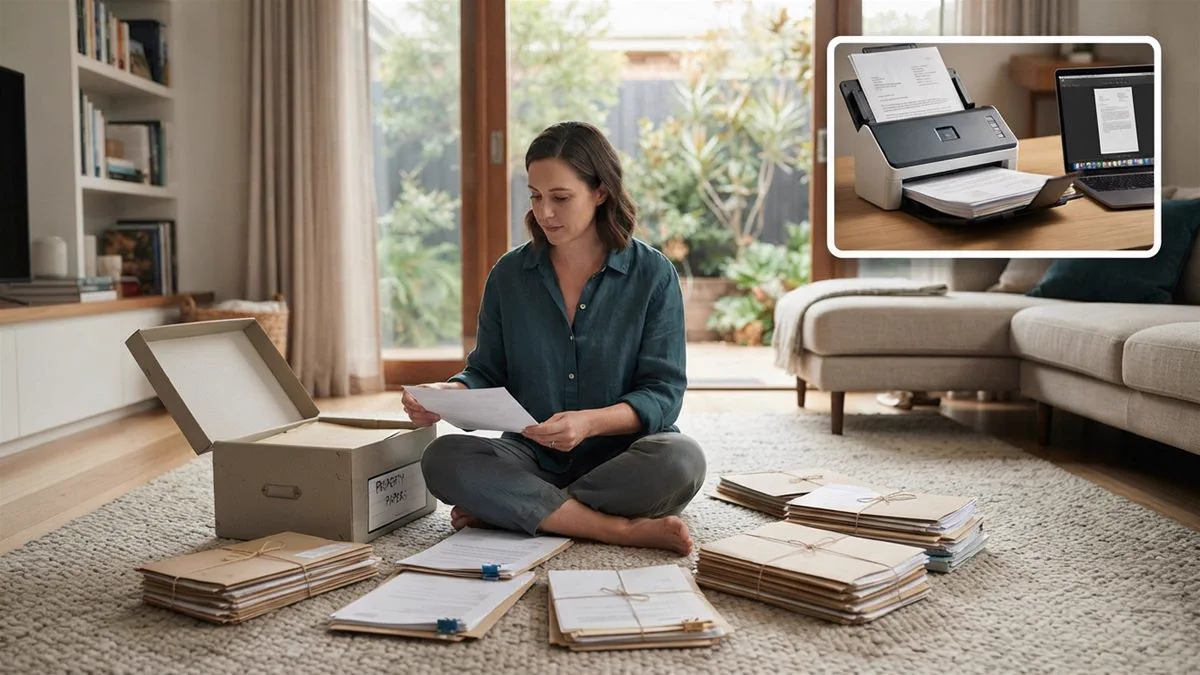
    An archive box of property paperwork being sorted on the floor of an Australian home

    The documents that decide the answer

    DocumentWhat it settlesWhere to get it back
    Purchase contractThe start of the ownership periodYour conveyancer's file, or the state land titles office
    Purchase settlement statementStamp duty, adjustments, legal feesThe conveyancer or solicitor who acted
    Sale contractThe end of the ownership period, and the income yearYour agent or conveyancer
    Selling agent's accountCommission and marketing — second elementThe agency
    The first lease or first agent's statementThe income time, to the dayThe managing agent, or your own bank records for the first rent received
    Rental statementsWhich years were income-producingThe managing agent; annual summaries go back years
    Retrospective valuationThe cost base, where section 118-192 appliesA qualified valuer, commissioned now
    Council rates historyThird element for non-let yearsAsk the council for a rates payment history
    Land tax assessmentsThird elementThe state revenue office
    Loan interest summariesThird element — often the largest partThe lender; historical summaries on request
    Insurance renewalsThird elementThe insurer or broker
    Strata levy ledgerThird element for a unitThe owners corporation or strata manager
    Builder and trade invoicesFourth element — capital improvementsThe trades, your bank statements, and council DA records for anything approved
    Utility accounts in your nameEvidence of when you actually lived thereThe retailer; connection and disconnection dates
    Electoral roll and licence historyEvidence of main residenceThe AEC and the state road authority

    Evidence of living somewhere

    Half of this subject is about where somebody's home was, and that is a question of fact rather than a document. What answers it is an accumulation: the address on the electoral roll, on the driver's licence, with the bank, the employer, the super fund and the insurers; where the mail went; when the electricity was connected in your name and how much of it you used; where the furniture was.

    It matters most in two places — whether you moved in as soon as practicable after settlement, and whether you genuinely re-established the dwelling as your main residence after an absence. Both are questions the Commissioner decides on the whole picture. Moving back in before you sell.

    How long to keep it

    The general rule is five years from the date you lodge the return in which the gain is reported. For a property held twenty years that means holding paperwork from the year you bought it for twenty-five years in total, which is longer than most people keep anything.

    The practical version: scan everything property-related into one folder the day it arrives, and never throw the folder away. It takes minutes a year and it is the difference between claiming the third element and not.

    What to do now, if you are about to sell

    Four phone calls and one email cover most of it. The council for a rates history, the lender for an interest summary, the managing agent for the rental statements and the first lease, the insurer for the renewal history, and the conveyancer who acted on the purchase for the settlement statement.

    Then, if the market value rule applies, a valuer for the one day that matters — and that is the one worth starting first, because it takes the longest. The valuation, and which day it is for.

    If the records are genuinely gone

    Reasonable estimates supported by whatever evidence exists are better than leaving an element at zero, and the ATO's own guidance accepts that historical records are sometimes irrecoverable. What it does not accept is a round number with nothing behind it.

    Where a fact rather than a figure is missing — the exact income time, whether an arrangement was commercial — a private ruling settles it in advance and binds the Commissioner on the facts you set out. It is free and it is written, and it is a great deal cheaper than an amendment two years later.

    The five minute version

    If you do nothing else, get these five things into one folder before the property is listed.

    The two contracts. Front page of each is enough — they carry the dates that decide the ownership period and the income year.

    The purchase settlement statement. It has the stamp duty on it, which is frequently the largest single item of the second element of the cost base and the one most often left out.

    The first lease or the first rental statement. It fixes the income time to the day, and two separate rules hang off that date.

    A rates payment history from the council. One phone call, and it usually covers a decade. It anchors the third element and, incidentally, confirms who was living there.

    A loan interest summary from the lender. The largest part of the third element on any property bought with a mortgage, and the easiest to obtain while the loan still exists. Once the loan is discharged it becomes noticeably harder.

    Everything else on the table above is worth having. These five are worth having first, because each of them is either irreplaceable or gets harder to obtain the longer it is left.

    Find out which records are actually worth chasing

    Run your figures with the ownership costs at zero, then again with an estimate. The difference is exactly what an afternoon of phone calls is worth.

    Sign in

    Your saved reports and your access are waiting.

    Create your account

    Free. It saves your scenarios so you never re-type a figure.

    Reset your password

    We will email you a link that works once and expires in an hour.

    Choose a new password

    Pick something you will remember.

    Your details

    Change your password

    Full report access Free view

    Unlock the full report to see every option priced and ranked.

    Your passes

    My reports

    Your orders

    support@calculatedchoices.com.au Questions about the calculator, getting back in, or a refund
    Australian Taxation Office — 13 28 61 Individuals and their tax. They can tell you what the law says, and a written private ruling from them binds the Commissioner on the facts you set out.
    Tax Practitioners Board — 1300 362 829 Check that a tax agent is registered before you engage them, and make a complaint about one afterwards.
    Taxation Ombudsman — 1300 044 176 The Inspector-General of Taxation. For complaints about how the ATO has handled something, rather than about the law itself.
    National Debt Helpline — 1800 007 007 Free, independent financial counselling. Worth a call if a tax bill on a sale is going to land somewhere difficult.

    Send us a message

    Millions of Australians have done exactly the same thing: bought a home, lived in it, moved for work or family, rented it to somebody else, and then years later put it on the market. Somewhere in those dates is the difference between owing nothing and owing a six figure amount, and it is decided by facts that were settled years ago — the day the first tenant moved in, whether the place sat empty or earned rent, and which of two homes was nominated for which years. By the time a return is prepared, none of it can be changed. The one thing that still can be is the date on the sale contract, and that is usually agreed by an agent for reasons that have nothing to do with tax.

    None of this is secret. It is in Subdivision 118-B of the Income Tax Assessment Act 1997 — section 118-110 for the full exemption, 118-185 for the day count, 118-145 for the six-year absence rule, 118-192 for the market value substitution, 118-190 for business use and 118-120 for the two hectare limit — with the tax itself in the individual rate schedule for the year the contract is signed. Anybody can read all of it. Almost nobody does, because it is written for administrators, the rules that matter most have no form to lodge and no letter to trigger them, and the arithmetic is a day count over fifteen years that nobody is going to do on the back of an envelope.

    Main Residence CGT does one thing: it applies those published rules to your dates and shows you, in full, what they produce. Every stretch of your ownership listed with what the rules do to it, the cost base built element by element, every lawful way of reporting the same sale priced and put in order on one stated measure, and five sensitivity runs so that every assumption in it can be argued with rather than taken on trust. You can check it, disagree with it, or hand it to somebody who can act on it.

    We do not tell you what to do. We are not registered tax agents, we are not licensed to give personal advice, and the report ranks options without recommending one — because the arithmetic is the part people are missing, not the opinion. Your assessment is made by the Australian Taxation Office on the return you lodge. Here is what the advice costs and what it adds if you decide you want that as well.

    1. About this policy

    This policy explains how XTO Pty. Ltd. (we, us, our) collects, holds, uses and discloses personal information, and how you can access, correct or complain about it. We handle personal information in accordance with the Privacy Act 1988 (Cth) and the Australian Privacy Principles (APPs).

    It applies to calculatedchoices.com.au and to every email we send you. It does not apply to any third party site we link to.

    2. What we never collect

    We do not ask for, and you should never send us, your Medicare number, tax file number, tax file numbers, bank account numbers or any government identifier, bank account details or card number. The calculator does not need them. If you send one to us anyway we will delete it rather than store it.

    We do not collect sensitive information as defined in the Privacy Act — health information, racial or ethnic origin, political or religious beliefs, sexual orientation, or criminal record. Where the calculator asks about care needs it asks about funding categories, never about a medical condition.

    3. What we collect, and why

    Information you give us

    • Account details — first and last name, email address, and optionally phone, suburb, state, postcode and your relationship to the person entering care. Used to create and secure your account and to deliver what you bought.
    • Saved reports — the figures you entered and the results produced, stored against your account only if you choose to save one. Used so you can return to and compare them.
    • Purchases — the order, amount, currency, access period and the PayPal transaction reference. Used to grant access, issue receipts and meet our tax and record keeping obligations.
    • Correspondence — what you write to us and our reply. Used to answer you and to resolve disputes.
    • Email estimates and reviews — the email address you give us to receive a free estimate, and any review you submit for publication.

    Information collected automatically

    • Technical data — IP address, browser user agent, device type, screen and viewport size, and the referring page.
    • Activity data — the pages you open, the order you open them in, time spent on each, how far you scroll, which calculator steps you complete, and which buttons you press. Used to understand where the site is confusing and to improve it.
    • Advertising identifiers — where you arrive from an advertisement, the click identifier appended to the link (for example Google's gclid) and any campaign parameters, so we can measure which advertising works.

    4. Where the calculation happens

    In your browser, on your device. The figures you type into the calculator are processed locally to produce your result. They are transmitted to us only if you choose to save a scenario to your account. If you never save one, we never receive them.

    Two exceptions, and both are things you have to choose to do:

    • If you ask us to email your free estimate, the headline figure that estimate produced is stored with your email address so the estimate we send you is the one you saw.
    • If you use the optional report assistant, the figures in the report you have open are sent to us and on to the service that answers it. That is the only part of this site that sends anything to a third party, and section 5 sets out exactly what does and does not travel.

    5. The report assistant

    A paid report comes with an optional assistant you can ask questions about your own figures. It is the one part of this site that sends anything to a third party, so it is set out here in full.

    It is entirely your choice, and it does nothing until you use it. Nothing is sent anywhere unless you open the assistant and ask a question. If you never open it, this section does not apply to you at all, and the rest of the report works exactly the same.

    What is sent when you do ask

    • A plain-text summary of the figures in the report you have open — the amounts, categories and comparisons the report already shows you on screen.
    • The question you typed, and the questions and answers already in that conversation, so a follow-up makes sense.

    What is not sent

    • Your name. The name field on the calculator is optional and is used only on your own report cover. It is not part of what the assistant is given.
    • Your email address, your account, your phone number or your street address. The assistant is not told who you are, and is given no way to find out.
    • Your Medicare number, tax file number, tax file numbers, bank account numbers or any government identifier, bank account or card details — we never hold these in the first place. See section 2.

    What travels is a set of amounts and categories. On its own it does not identify anybody, and we do not send anything alongside it that would.

    Who processes it

    The request is answered by Google's Gemini API, which processes it outside Australia — see sections 10 and 11. We do not train any model on your figures and we have no arrangement permitting anyone to do so; what Google does with data sent to its API is governed by its own terms, which we do not control.

    How long it is kept

    • The summary of your figures is held in our server's memory for one hour so a conversation does not have to re-send it with every question, and is then discarded. It is never written to our database.
    • The conversation itself is stored in your own browser tab and is gone when you close that tab. We do not keep a copy.
    • We record that a question was asked, and how long it was, so we know whether the feature is used. We do not record what it said.

    Because the assistant is optional, you can have the entire paid report without any of the above ever happening. Nothing in the report is withheld from somebody who never opens it.

    6. Cookies and browser storage

    We use the following, and nothing else:

    • An authentication cookie — set only when you sign in, so you stay signed in. Strictly necessary.
    • A guest identifier — so a scenario saved before you register can be attached to your account when you do.
    • A session key (browser session storage) — identifies one visit for the activity data described above. It is a random value and is discarded when you close the tab.
    • A visitor key (browser local storage) — a random value kept for up to twelve months so we can tell a returning visitor from a new one. It contains no personal information and is not shared with anyone.
    • Preferences — your light or dark theme choice.

    You can clear or block these through your browser at any time. Clearing them will sign you out and reset your preferences; the site will otherwise work normally.

    7. Analytics and advertising

    We use Google Analytics and Google Ads to measure how people find and use the site and whether our advertising is worth running. Where these are enabled, Google receives your IP address, device and browser information, the pages you viewed, and — when you complete a purchase — the order reference and the amount paid. Google may set its own cookies and may combine this with data it holds from other sources. Google's handling of that data is governed by its own privacy policy, not ours.

    We do not sell your personal information, and we do not disclose it to data brokers, advertising networks other than as described above, the Australian Taxation Office, tax agents, accountants or lenders, or anyone who might try to sell you something.

    You can opt out of Google Analytics using Google's browser add-on, and you can adjust personalised advertising in your Google account settings.

    8. Payments

    Payments are processed by PayPal. Your card or account details are entered on PayPal's systems and are never transmitted to, seen by, or stored on our servers. We receive only the transaction reference, the amount, the status and the email address associated with the payment.

    9. Who we disclose information to

    • Service providers who host the site, send our email and process payments, and only so they can perform that function.
    • Google, as described in sections 5 and 7.
    • Professional advisers — our accountants and lawyers, under obligations of confidence.
    • A purchaser of our business, if it is ever sold, on terms that require them to honour this policy.
    • Law enforcement, courts or regulators, where we are required or authorised by law.

    10. Overseas disclosure

    Some of these providers store or process data outside Australia, principally in the United States (Google, PayPal) and, depending on our email provider, in other countries. By using the site you acknowledge that we take reasonable steps to ensure overseas recipients handle your information consistently with the APPs, but that we cannot control and are not accountable for how an overseas recipient handles it once disclosed, and that you may not be able to seek redress in that jurisdiction.

    11. Security

    The site runs entirely over HTTPS. Passwords are stored as salted PBKDF2 hashes, not as text anyone here can read. Access to the database is restricted to those who need it. No system is perfectly secure, and we cannot guarantee the security of information transmitted over the internet, but we take reasonable steps to protect it from misuse, interference, loss and unauthorised access, modification or disclosure.

    If a data breach occurs that is likely to result in serious harm, we will notify you and the Office of the Australian Information Commissioner as required by the Notifiable Data Breaches scheme.

    12. How long we keep it

    • Account and saved reports — until you delete them or ask us to.
    • Order and payment records — seven years, as required by Australian tax law. We cannot delete these earlier, even on request.
    • Activity data — up to twenty‑six months, then deleted or aggregated so it no longer identifies anyone.
    • Email leads — until you unsubscribe, then only the record needed to honour that unsubscribe.

    13. Direct marketing

    If you give us your email address for a free estimate we may follow up about the full report. Every commercial email we send identifies us and carries a functional unsubscribe link, as required by the Spam Act 2003 (Cth). We action unsubscribes immediately. You will still receive transactional email — receipts, access details and password resets — because those are not marketing.

    14. Accessing, correcting and deleting your information

    Write to support@calculatedchoices.com.au. We will:

    • give you access to the personal information we hold about you, or explain why we cannot;
    • correct anything inaccurate, out of date, incomplete, irrelevant or misleading;
    • delete your account and every scenario attached to it, subject to the retention periods in section 12.

    We will respond within 30 days and will not charge you for making a request. We may need to verify your identity first.

    15. Complaints

    If you think we have breached the APPs, write to support@calculatedchoices.com.au with "Privacy complaint" in the subject line. We will acknowledge within 5 business days and respond substantively within 30 days.

    If you are not satisfied with our response, you may complain to the Office of the Australian Information Commissioner: oaic.gov.au, 1300 363 992, or GPO Box 5288, Sydney NSW 2001.

    16. Children

    The site is intended for anyone selling a home they once lived in. It is not directed at children and we do not knowingly collect personal information from anyone under 18.

    17. Changes to this policy

    We may update this policy. The effective date at the top changes when we do. Where a change is material we will tell you by email or by notice on the site before it takes effect. Continuing to use the site after that means you accept the updated policy.

    18. Contact

    Privacy Officer
    XTO Pty. Ltd. (ACN [ACN NOT SET])
    Level 1, 457 Elizabeth Street, Surry Hills NSW 2010
    support@calculatedchoices.com.au
    1. Agreement

    By using calculatedchoices.com.au (the site) or buying a pass you agree to these terms. If you do not agree, do not use the site. In these terms we, us and our mean XTO Pty. Ltd.; you means the person using the site or, where you use it on behalf of another person or an entity, both you and that person or entity.

    2. Eligibility

    You must be at least 18 and legally able to enter a contract. The site is intended for use in Australia and applies Australian law and the main residence exemption rules in the Income Tax Assessment Act 1997 only. If you use it from outside Australia you do so on your own initiative and are responsible for local compliance.

    3. What this service is

    Main Residence CGT is an information and calculation service. It applies the main residence exemption rules in the Income Tax Assessment Act 1997 to figures you supply and reports what those rules produce, showing its workings and naming the fee schedule used.

    4. What it is not

    It is not financial product advice, personal advice, legal advice, tax advice, accounting advice or taxation advice, and it is not a recommendation to acquire, dispose of or deal in any financial product.

    • We do not hold an Australian Financial Services Licence and are not authorised representatives of any licensee.
    • We do not know your full circumstances, objectives, financial situation or needs, and nothing produced by the site takes them into account.
    • Where the report ranks options it does so on a single arithmetic measure that deliberately ignores everything a number cannot capture — health, family circumstances, tax position, estate planning, the dates, the valuations and the records behind your own property, and what actually matters to you.
    • We receive no commission and have no relationship with any the Australian Taxation Office, your tax agent, your conveyancer, your valuer or your lender.

    You should obtain independent, licensed advice before acting. Any decision you make is yours.

    5. Accuracy and estimates

    We take considerable care to keep the rates current and the formulas right, and every report prints the schedule it was built on. Even so:

    • All output is an estimate based on the figures you entered. If those figures are wrong, incomplete or out of date, the output will be too.
    • Your actual assessment is made by the Australian Taxation Office on the return you lodge, and any market value this calculation rests on has to come from a qualified valuer rather than from an estimate. Those prevail over anything the site produces.
    • Rates, thresholds and caps change by legislation and indexation, and legislation can change without notice or retrospectively.
    • Projections rely on assumptions about the future — investment returns, indexation, home values, length of stay — which are inherently uncertain and will not be accurate.

    Always confirm before you act.

    6. Your responsibility for decisions

    You acknowledge and agree that you are solely responsible for evaluating the output, for verifying it against official sources, for obtaining independent professional advice, and for every decision you make or do not make. We are not your adviser and no fiduciary or advisory relationship arises from your use of the site.

    7. Accounts

    You are responsible for keeping your password confidential and for everything done under your account. Tell us immediately at support@calculatedchoices.com.au if you suspect unauthorised use. We may suspend or close an account we reasonably believe is being used in breach of these terms.

    8. Passes, price and payment

    • A pass grants access to the full report from the moment payment is confirmed, and it does not expire. It does not renew and nothing is charged automatically. There is no subscription and no card is kept on file.
    • Prices are in Australian dollars and include GST where applicable. We may change prices at any time; the price shown when you buy is the price you pay.
    • Payment is processed by PayPal under its own terms. We do not receive your card details.
    • A pass is for personal or single household use. It is not transferable and may not be shared, resold or used to provide a service to others.

    9. Reports you export

    A report you export as a PDF or otherwise save remains yours to keep and to show to family, an adviser or a registered tax agent. That licence is personal and non‑commercial. It does not permit republication, resale, or use as part of a product or service you provide to others.

    10. Refunds

    Our promise: if the calculator cannot properly model your circumstances, or something has gone wrong, write to us within 14 days of purchase and we will refund the pass. No form and no argument. We would rather refund you than have you rely on a number that does not fit.

    This is a voluntary commercial guarantee offered in addition to, and it does not limit, your rights under the Australian Consumer Law. Refunds are made to the original payment method within five business days of us accepting the request.

    11. Acceptable use

    You must not:

    • scrape, crawl, harvest, mirror or systematically extract the site or its content;
    • attempt to access the paid report engine, any account, or any data without authorisation;
    • reverse engineer, decompile or attempt to derive the source of any part of the service;
    • interfere with the site's operation or security, or impose an unreasonable load on it;
    • resell, sublicense or commercially exploit the service or its output;
    • use the site to provide financial, legal or placement advice to third parties; or
    • use it unlawfully, or to infringe anyone's rights.

    12. Intellectual property

    All content, code, calculation methodology, report design, text and branding on the site is owned by us or licensed to us and is protected by copyright and other laws. Legislated rates and government data are not owned by anyone; our expression, arrangement and implementation of them is. Nothing in these terms transfers ownership to you.

    13. Availability

    We aim to keep the site available but do not guarantee it will be uninterrupted, timely, secure or error free. We may modify, suspend or discontinue any part of it, and may perform maintenance, at any time. If we permanently discontinue the service while your pass is running, we will refund the unused portion.

    14. Third parties

    The site relies on third party services including PayPal, Google and our hosting and email providers, and links to third party sites and government resources. We are not responsible for those services or sites, their availability, their content or their terms.

    15. Australian Consumer Law

    Our goods and services come with guarantees that cannot be excluded under the Australian Consumer Law. For major failures with the service, you are entitled to cancel your service contract with us and to a refund for the unused portion, or to compensation for its reduced value. You are also entitled to be compensated for any other reasonably foreseeable loss or damage. If the failure does not amount to a major failure, you are entitled to have problems with the service rectified in a reasonable time and, if this is not done, to cancel your contract and obtain a refund for the unused portion of the contract.

    Nothing in these terms excludes, restricts or modifies any consumer guarantee, right or remedy conferred by the Australian Consumer Law or any other law which cannot lawfully be excluded, restricted or modified. If any part of these terms would do so, that part does not apply.

    16. Limitation of liability

    Subject always to section 15, and to the maximum extent permitted by law:

    • the site and its output are provided "as is" and "as available", and we exclude all warranties, conditions, guarantees and representations not expressly set out in these terms, whether express, implied, statutory or otherwise, including as to accuracy, fitness for a particular purpose, merchantability and non‑infringement;
    • we are not liable for any indirect, incidental, special, punitive or consequential loss, or for any loss of profit, revenue, savings, opportunity, goodwill, data, anticipated benefit, or for any loss arising from a decision made or not made in reliance on the site, however arising and whether in contract, tort (including negligence), statute or otherwise, even if we were advised of the possibility;
    • our total aggregate liability to you for all claims connected with the site or these terms is limited, at our election, to resupplying the service or to refunding the amount you actually paid us in the twelve months before the claim arose; and
    • where liability cannot be excluded but can be limited, it is limited as set out above.

    You agree that this allocation of risk is reasonable given the price of the service and that the service is information rather than advice.

    Our liability is reduced to the extent your loss is caused or contributed to by you, including by entering incorrect figures, by failing to verify output against official sources, or by failing to obtain independent advice.

    17. Indemnity

    To the maximum extent permitted by law, you indemnify us against any claim, loss, liability, cost or expense (including reasonable legal costs) arising from your breach of these terms, your misuse of the site, or your provision of the site's output to a third party who relies on it. This does not apply to the extent the claim arises from our own breach, negligence or wilful misconduct.

    18. Termination

    You may stop using the site at any time. We may suspend or terminate your access immediately if you breach these terms. Sections 4, 5, 6, 9, 12, 15, 16, 17, 19 and 20 survive termination.

    19. Privacy

    Our Privacy Policy forms part of these terms and explains how we handle personal information.

    20. Governing law

    These terms are governed by the laws of New South Wales, Australia. You and we submit to the non‑exclusive jurisdiction of the courts of New South Wales and the courts entitled to hear appeals from them.

    21. General

    • Changes. We may amend these terms. The effective date changes when we do, and material changes will be notified by email or on the site before they take effect. The terms in force when you bought a pass govern that purchase.
    • Severability. If a provision is unenforceable it is read down to the minimum extent necessary, or severed, without affecting the rest.
    • Waiver. A failure to enforce a right is not a waiver of it.
    • Assignment. You may not assign these terms without our consent. We may assign them on a sale of the business.
    • Entire agreement. These terms and the Privacy Policy are the entire agreement between us about the site.

    22. Contact

    XTO Pty. Ltd. (ACN [ACN NOT SET])
    Level 1, 457 Elizabeth Street, Surry Hills NSW 2010
    support@calculatedchoices.com.au

    How much will you lose?