"They've got an ABN, so they're a contractor."
It is the single most common thing anybody says about this, and none of the five tests asks whether a worker has an ABN. An ABN is a registration number. It is not a status, and it has never been one.
Free, and nothing changes on this page. One email, then only if the rates change or a deadline is close. Unsubscribe in one click.
Every calculation is unlocked. Change one answer and re-run it as many times as you like — nothing is deducted, nothing counts down, and none of it expires.
The rules moved in 2022, again in 2024, and again on 1 July 2026
Your contractors have ABNs. They invoice you every month. They have done for years, and nobody has ever suggested there was a problem with it. What nobody has told you is that five separate tests can each decide the same person is an employee — and passing four of them is not passing.
An employment lawyer works this out for $220 to $850 an hour, over weeks, and a classification review across a group of contractors is not a one hour job. We do it in three minutes — every test answered separately, every back year priced, and every lawful way out ranked.
A rough guide on the answers most businesses give. The full calculator asks how the work is actually done, which is what decides whether any of this applies to you at all.
If this is you
The rules changed twice in three years, in opposite directions, and nobody was required to tell anybody. Most of the advice still online was written before either change.
It is the single most common thing anybody says about this, and none of the five tests asks whether a worker has an ABN. An ABN is a registration number. It is not a status, and it has never been one.
Which mattered a great deal after the High Court decided Personnel Contracting in 2022, and matters considerably less since 26 August 2024, when the Fair Work Act went back to the real substance and practical reality of the whole relationship. Both are true at once, for different purposes.
They may well have been right about the one test they were asked about. Super, payroll tax and workers compensation are three more, administered by three different authorities, with three different definitions, and nobody is required to check all of them at once.
The question people are most afraid to ask, and the answer is why: there is no statutory time limit on a super guarantee assessment, and every 30 June adds another year of shortfall plus another year of interest on every year before it.
You answer eight questions about how the work actually gets done — the same ones a court and the Commissioner ask. We run all five tests separately, price what the back years are carrying, and put every lawful way out in order. No appointment, no hourly rate, and we never ask for a worker's name, an ABN or a tax file number.
Eight questions, three minutes, and you will know which of the five tests you meet. It costs nothing.
The loss
Both pay six people $80,000 a year. Both have been doing it for five years. Both are in New South Wales and already at the payroll tax threshold. The only difference is which of them found out from a calculator.
Both businesses are invented. What is not invented is any of the arithmetic: the super guarantee rate and the charge, the general interest charge, the administrative uplift, the New South Wales payroll tax rate and threshold, the workers compensation premium rate and the National Employment Standards are all published, and this calculator applies them. The worked examples run the same engine, and you can check these two against them.
The way out
On the six contractors above, the gap between the dearest and the cheapest is $756,353. Not one of these is a loophole and not one of them is advice — they are the options the law actually leaves open. The report prices every one of them that is open to you on your own answers and puts them in order.
The years already run keep collecting interest and every year ahead adds another shortfall. Where no test is met this is the cheapest line on the list. Where five are, it is the dearest by a distance.
Stops it accruing from the next pay run at about 38% on top of the wage, all of it deductible and none of it carrying a penalty. It does not settle the back years.
The only option that reaches the past. It remits the administrative uplift, the late payment penalty, the payroll tax penalty tax and the denied deduction — and never the shortfall or the interest.
A real right of delegation, their own tools, their own rectification risk. It removes the exposure ahead and nothing behind — and a change on paper alone does not work, because section 15AA looks at the practical reality.
Defeats the super rule and most workers compensation deeming, because both need a contract with a natural person. It does not touch payroll tax, and it brings the personal services income rules with it.
Available above — a year. It removes the Fair Work test and the leave that comes with it, and removes nothing from super, payroll tax or workers compensation.
Which of these is cheapest depends entirely on your own answers, and on most arrangements it is not the one people expect. Three minutes, free, and the order is on the next screen.
The alternatives
| Guess What most businesses do |
A lawyer Employment or tax |
Contractor or Employee This calculator |
|
|---|---|---|---|
| What it costs | Nothing now, and every 30 June it grows |
$220 – $850 an hour | $249 |
| How long it takes | An afternoon of worrying | Weeks, and an appointment | Under 3 minutes |
| All five tests, separately | |||
| Every option priced and ranked | Usually described, rarely costed | ||
| Can act for you in a dispute | |||
| Working shown | Usually not |
The clock
Two of them have already passed and are the reason most advice still online is wrong. The third arrives every year whether anybody does anything or not.
Section 15AA took effect and required the real substance, practical reality and true nature of the whole relationship to be looked at, rather than only the terms of the contract. It applies to Fair Work purposes and not to the tax or super tests, which is why one worker can be a contractor for super and an employee for leave. What section 15AA actually says.
Super now has to reach the fund within — of each payday. A shortfall carries notional earnings compounding daily at the general interest charge of —, an administrative uplift of up to —, and a late payment penalty on top. These figures are the — rules.
Each financial year end adds a whole year of shortfall at the super guarantee rate of — and starts another year of interest running on every year before it. It is the one date on this subject that moves the figure whether anybody does anything or not. How far back it can go.
The report
The free estimate tells you which of the five tests you meet and why. This is the part that splits the money up, prices every lawful way out and puts them in order. 13 sections and 12 charts, on your own answers, with every working shown so you can check it or argue with it.
See a real one, free — an invented business run all the way through, with six sections open exactly as a customer sees them, and the assistant live on it for two questions.
How it works
If you know how many people, roughly what they invoice and how the work actually gets done, you have everything you need. Simple mode asks eight questions. Advanced is there if you want to set your own workers compensation rate and Part 7 assumption.
How many people, what they invoice, how long it has run, where the work happens, and eight questions about control, delegation, tools, risk and independence. We do not ask for a worker's name, an ABN, a tax file number or a payroll record, and the whole calculation happens in your browser.
All five answered separately, with the reason for each, your multifactor score out of 100, and what the back years are carrying as a band. Every lawful option named, with what it means and the first half of the process it involves.
$249 opens the full report: the back years split by year and by rule, every option priced and ranked, and what a disclosure is worth before anybody starts asking. PDF included, ready to send to your accountant.
The Superannuation Guarantee (Administration) Act 1992, the Fair Work Act 2009, each state and territory's Payroll Tax Act and workers compensation Act, and the ATO's own ruling TR 2023/4. Named, dated and listed in the guides.
Nothing is a black box. Every figure in the report carries the arithmetic that produced it, at the rate that applied in the year it applied to.
We are not licensed to give legal, tax or workplace relations advice, and the arithmetic is the part most businesses are missing anyway. The report ranks and it never recommends.
If the report does not apply to your circumstances, tell us what went wrong within 14 days and it is refunded in full.
Included with the report
Every report comes with an assistant that has read your report — your answers, your tests, your figures — and explains any of it in plain English. Not a search box and not a help page. It knows what your report says because it has been given it.
An example of the kind of answer it gives, on the sample report's figures.
Pricing
One payment, no expiry, nothing to renew, and we never keep your card. It opens the whole report and lets you re-run it as often as you like, for as long as you like.
Prices in Australian dollars. Paid securely through PayPal — card or PayPal balance, no account needed. See a sample report before you decide.
Questions
No. An ABN is a registration number, not a status, and none of the five tests asks whether a worker has one. A person can hold an ABN, invoice you every month, and still be your employee under four of the five.
There is no statutory time limit on a super guarantee assessment. This calculator stops at seven years because that is where record keeping obligations and practical recovery usually stop, and it says so — if your arrangement is older, the real figure is larger than the one on your report.
Because it is not the super. For quarters up to 30 June 2026 it is the shortfall calculated on salary and wages rather than ordinary time earnings, plus nominal interest at 10% a year from the first day of the quarter, plus $20 per employee per quarter — and none of it was deductible. Since 1 July 2026 it is the shortfall plus notional earnings compounding daily at the general interest charge of 11.43%, plus an administrative uplift of up to 60%, plus a late payment penalty.
Partly, and not the part people expect. A company defeats the super guarantee labour contract rule and most workers compensation deeming provisions, because both need a contract with a natural person. It does not defeat the payroll tax relevant contract provisions, which catch a company exactly as they catch a sole trader — and an entity interposed at the business's insistence invites the personal services income rules, Part IVA and the sham contracting provisions.
No. It is an information service: it applies the published rules and rates to the answers you enter and shows what they produce, with every working visible. It ranks options on one stated arithmetic measure and does not recommend one. Whether a person is an employee is decided by a court or by the Fair Work Commission on all of the evidence, not by a calculator.
Every 30 June adds another year of shortfall and another year of interest on every year before it, and since 1 July 2026 the Australian Taxation Office sees late super through Single Touch Payroll almost as it happens. The only question is whether you find out from a calculator or from an assessment — and three minutes now is the cheapest three minutes of the whole process.
No card. No sign up. Your answer on the next screen.
Eight questions. Five tests. One number you do not currently have.
Most contractor checklists give you a yes or a no. This one prices the five separate tests that can each make your contractor an employee — and shows you what every lawful way out of the arrangement costs, side by side.
Rules as at —.
Your estimate
What the years already run would produce if this arrangement were characterised as employment, on your own answers, today.
You can provide a different email to use as your login - or the PayPal one
And you can ask it questions. Your report comes with an assistant that has read it and explains any figure in plain English — if you want it. It is given the amounts on your report, never your name or your email, and the conversation stays in your browser.
A link straight back to this result, so you can pick it up on a laptop or send it to whoever actually decides. One email, and the figure is in it.
One email, then only if the figures change or a deadline is close. Unsubscribe in one click. We never sell your address.
One payment, and the meter is still running
Thirteen sections and twelve charts on your own arrangement. Which of the five tests you meet and why, the back years split by rule and by year, every lawful option ranked on one stated measure, and what a voluntary disclosure is actually worth. One payment, nothing renews, and we never ask for a worker name, an ABN or a tax file number.
Yes, it is included, and using it is entirely your choice. It sits behind one button on your report and does nothing until you press it — nothing in the report is held back from somebody who never opens it.
When you do ask it something, what it receives is the figures on your report: amounts and categories. Not your name, not your email address, not your account, and never a Medicare number, tax file number or bank detail — we do not hold those in the first place. The name you can put on the report cover is optional and is not part of what it is given. The conversation stays in your browser tab and is gone when you close it, and we record that a question was asked without recording what it said.
Section 5 of the privacy policy sets out exactly what does and does not travel, including who processes it.
No. You pay once and the access is yours. There is no subscription and nothing renews. PayPal handles the payment, so we never even see your card number.
Because the arithmetic is the part most businesses are missing, and arithmetic scales. An employment lawyer or a registered tax agent gives you a considered view of your particular facts, can argue a contested classification and can act for you if it is disputed — none of which this service is licensed to do or attempts. What it does is run the five tests on the answers you give, price every back year at the rate that applied in it, and rank every lawful option on one stated measure, with the working shown. For a contested position or an actual disclosure, take the report to somebody licensed. That is what it is for.
Contractor or Employee provides information, not legal, tax or workplace relations advice. We are not licensed to give it and we never tell you which option to pick. What we do is apply the published rules to the answers you enter and show you what they produce, with every working visible. Your real position is decided by other people: whether a person is an employee is decided by a court or by the Fair Work Commission on all of the evidence, the super guarantee charge is assessed by the Australian Taxation Office, and payroll tax is assessed by your state or territory revenue office. Nothing on this site binds any of them.
The full report opens the moment the payment clears, on the answers you already gave — no forms to fill in again and no waiting.
You can provide a different email to use as your login - or the PayPal one
Worked examples
Seven businesses carrying money they did not know about, and three whose arrangements actually stand up. Every figure on this page is computed at page load by the same engine a paying customer's report uses, against the current published rules — nothing here is typed into the markup, so nothing here can quietly go stale.
The common law test, section 15AA of the Fair Work Act, section 12(3) of the super guarantee Act, each state's payroll tax relevant contract rules and each workers compensation scheme's deeming provisions. They have different words and they regularly reach different answers about the same person.
Unpaid super turns into the super guarantee charge, which is the shortfall plus interest plus fees plus, since 1 July 2026, an administrative uplift of up to 60%. Paying the super late does not avoid it. Only paying it on time does.
Everything below is those facts in real dollars, for ten different businesses. Worked out on the current rules.
Your figure turns on eight answers about how the work is actually done, how long it has run, how many people are on it and where they are. Change any one of them and the tests that are met change with it. Three minutes, free, and nothing you type leaves your browser.
Every lawful thing this business can do about the arrangement, and what each one costs over the eight year window. Same workers, same work — the difference is only in how the engagement is classified and when. Open Show Details on any row for what it means, what it does and does not fix, and the general process step by step — those panels are live on this page.
The cheapest line on the list is also the one with the most caveats, and the report says so rather than leaving you to find out. Having each worker invoice through their own company defeats section 12(3) and most of the workers compensation deeming provisions, because both need a contract with a natural person. It does not defeat the payroll tax relevant contract provisions, and an entity interposed at the business's insistence invites the personal services income rules, Part IVA and the sham contracting provisions. None of that is in the figure beside the row, and the note at the end of the full report says so in terms.
Seven contractors in New South Wales, $88,000 each a year, five years already run. All five tests are met on these answers.
The measure. Every option in this report is ranked on one thing and one thing only: the total amount payable over the window — what is assessable on the five years already run, plus what the arrangement costs over the three years ahead. It is arithmetic on the answers given, not a recommendation and not a prediction of what anybody would actually assess.
Five separate tests can each decide the same person is an employee, and they do not have to agree with one another.
| The test | Where Harbourline lands | Back years |
|---|---|---|
| The common law test, and PAYG withholding with it | Met | — |
| Fair Work Act section 15AA — leave and the National Employment Standards | Met | $460,026 |
| Super guarantee section 12(3) — a contract for labour | Met | $428,867 |
| Payroll tax — the relevant contract provisions | Met | $265,465 |
| Workers compensation — the deeming provisions | Met | $61,292 |
Common law and PAYG. The weighted factors come to 78 out of 100, which sits on the employment side of the midpoint. It carries nothing in the column above because this run assumes the workers declared and paid their own income tax, which is the usual basis on which the withholding penalty is remitted.
Super s 12(3). The contract is principally for the person's labour and there is no unfettered right to delegate, which is exactly what section 12(3) catches — whatever the common law test says.
Payroll tax. None of the statutory exemptions applies, so the payments are wages under the relevant contract provisions.
Harbourline's answers score 78 out of 100, which is a high reading. The weights are ours and no court uses them — what is published is the factors themselves and the emphasis the cases put on each of them.
Two answers carry 40 of the 100. Control is what the High Court came back to in Personnel Contracting, and an unfettered right to delegate is what the Full Federal Court held in JMC was incompatible with a contract for a person's labour. Harbourline's carpenters bring their own hand tools and are paid per job rather than per hour, which is why the score is 78 rather than higher.
Each year is charged at the rates that applied in that year, not at today's. Interest runs from the middle of each year to today, which is why the oldest year is dearer than the newest one on the same wages.
Super is not the largest line here, and that surprises most people. Leave and public holidays come to $460,026 against $428,867 of super and super guarantee charge, because four weeks of annual leave with a 17.5% loading, eleven public holidays and long service leave accrual add up to close to 15% of the day rate before any interest is charged on anything.
The same figures as the list above. The shorter the bar, the less is payable over the window.
Everything above is real arithmetic on a fictional business. Run yours and this half opens on your own answers.
And you can ask it questions. Every report comes with an assistant that has read your report and explains any figure in it in plain English. Using it is entirely your choice, it does nothing until you press the button, and it is given the amounts on your report and never your name, your email or your account.
That is somebody else's answer. Yours takes about three minutes and costs nothing.
The link may have already been used. If you are still getting emails, write to us and we will stop them by hand.
Guides
Twenty plain English guides to the Australian contractor rules, written for the person running the business rather than for the person advising them. Every one carries the current rates, names the section or the case it is describing, and shows the arithmetic rather than asserting the conclusion.
Reading is useful. Knowing what this is about to cost you is better.
Super
Further than most people expect. Income tax has amendment periods; the super guarantee charge does not work that way. There is no statutory time limit on the Commissioner making a default assessment of an unpaid super guarantee charge.
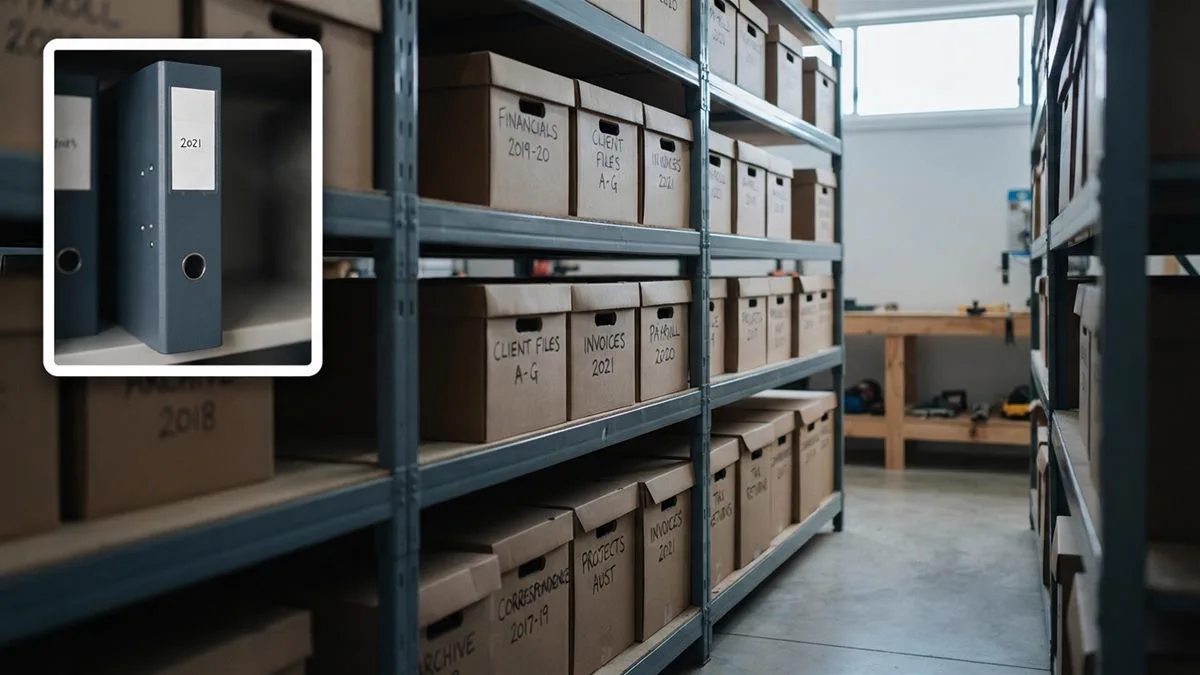
Income tax works on self-assessment with amendment periods — generally two years for most individuals and small businesses, four years otherwise, and unlimited in cases of fraud or evasion. Businesses reasonably assume super works the same way. It does not.
The super guarantee charge is imposed by statute the moment a shortfall arises. An employer is required to lodge a super guarantee statement and pay the charge; if they do not, the Commissioner may make a default assessment. Nothing in the super guarantee Act limits how far back that assessment can reach.
In practice, how far back the ATO goes is a question of evidence and of resourcing rather than of power. But "in practice they usually don't" is a very different position from "they cannot", and it is not a position anybody would want to explain to a purchaser during due diligence.
Employers must keep records that explain their super guarantee position for five years, including how the shortfall or absence of one was calculated. Those records have to be in English or readily accessible and convertible.
The thing to be clear about is what a missing record does. It does not remove the liability. It removes the employer's ability to dispute the Commissioner's figures, because a default assessment is made on the information available and the burden of showing it is excessive sits with the taxpayer. A business with no records for years six and seven is not safer than one with records; it is in a worse position if the Commissioner takes an interest.
This is counter-intuitive, because the super guarantee rate was lower in earlier years. It is still true, and the reason is interest.
| Year | SG rate | Interest has been running for |
|---|---|---|
| 2021-22 | 10% | about four and a half years |
| 2022-23 | 10.5% | about three and a half years |
| 2023-24 | 11% | about two and a half years |
| 2024-25 | 11.5% | about eighteen months |
| 2025-26 | 12% | about six months |
At 10% a year of nominal interest on the old regime, four and a half years of interest is roughly 45% on top of the shortfall — which more than offsets the two percentage points of rate difference. The report shows this directly: the oldest column in the by-year chart is usually the tallest.
Two things at once, which is why the growth is not linear.
So an arrangement that has run seven years does not carry seven times what a one-year arrangement carries. It carries considerably more, and the report draws that curve explicitly rather than asserting it.
The wizard stops at "seven years or more". That is a deliberate limit and it is stated on the page: seven years is where record keeping obligations and practical recovery generally stop being the live question, and modelling a twenty-year arrangement would produce a figure with more precision than the underlying evidence could ever support.
If your arrangement is older, read the report's figure as a floor rather than as the answer. The liability does not stop at seven years; the calculator does.
Businesses tend to imagine a random audit. In practice the triggers are more mundane and more common:
The options are the same six the calculator prices, and only two of them touch the back years at all: a voluntary disclosure changes what the past costs, and everything else changes only the future.
What a disclosure reaches is set out in the guide to voluntary disclosure. The short version is that it reaches the penalties and the administrative uplift and never the shortfall or the interest — so it is worth less than most people expect, and worth knowing the size of before anybody decides.
Waiting. Not because of any rule about delay, but because the interest is the largest single driver of the total and it runs whether anybody is looking or not. A business that discovers a problem and takes six months to decide what to do has added six months of interest on every back year, plus another half-year of shortfall, and has spent six months of the window in which a disclosure would still have been voluntary.
The report prices each year at the rate that applied in it, with interest run from the middle of that year to today, and draws the curve so you can see what another twelve months does.
Your saved reports and your access are waiting.
Free. It saves your scenarios so you never re-type a figure.
We will email you a link that works once and expires in an hour.
Pick something you will remember.
Unlock the full report to see every option priced and ranked.
About
You pay people who send you invoices. They have ABNs, most of them have signed something calling them a contractor, and it has worked this way for years. Then somebody mentions the High Court, or a worker asks about super, or an accountant says the word "reclassification", and suddenly there is a question attached to five years of payments that nobody can answer in a sentence. It is rarely urgent until it is very urgent, and by then the figure is larger than it was when it could have been dealt with quietly.
None of this is secret. It is in the Superannuation Guarantee (Administration) Act 1992, the Fair Work Act 2009, the Taxation Administration Act 1953, eight separate state and territory Payroll Tax Acts, eight separate workers compensation Acts, two 2022 High Court judgments, a 2023 Full Federal Court judgment and the Commissioner's own ruling TR 2023/4. That is the problem: it is thirty-odd documents written for administrators and lawyers, each answering a different question, indexed on cycles nobody outside the industry follows, and none of them adds anything up for a particular business.
Contractor or Employee does one thing: it applies those published rules to your answers and shows you, in full, what they produce. All five tests answered separately, every back year priced at the rate that applied in it, every lawful option ranked on one stated measure, and every working visible so you can check it, argue with it, or take it to somebody who can act on it.
We do not tell you what to do. We are not licensed to, and frankly the arithmetic is the part people are missing — not the opinion. Here is what that advice costs, and when it is worth it if you decide you want it as well.
Short version: we hold as little as we can, we never ask for the identifiers that matter most, and the calculation runs on your own device. The long version is below, because you are entitled to it.
This policy explains how XTO Pty. Ltd. (we, us, our) collects, holds, uses and discloses personal information, and how you can access, correct or complain about it. We handle personal information in accordance with the Privacy Act 1988 (Cth) and the Australian Privacy Principles (APPs).
It applies to calculatedchoices.com.au and to every email we send you. It does not apply to any third party site we link to.
We do not ask for, and you should never send us, your Medicare number, tax file number, tax file numbers, ABNs, worker names or payroll records, bank account details or card number. The calculator does not need them. If you send one to us anyway we will delete it rather than store it.
We do not collect sensitive information as defined in the Privacy Act — health information, racial or ethnic origin, political or religious beliefs, sexual orientation, or criminal record. Where the calculator asks about care needs it asks about funding categories, never about a medical condition.
Information you give us
Information collected automatically
In your browser, on your device. The figures you type into the calculator are processed locally to produce your result. They are transmitted to us only if you choose to save a scenario to your account. If you never save one, we never receive them.
Two exceptions, and both are things you have to choose to do:
A paid report comes with an optional assistant you can ask questions about your own figures. It is the one part of this site that sends anything to a third party, so it is set out here in full.
It is entirely your choice, and it does nothing until you use it. Nothing is sent anywhere unless you open the assistant and ask a question. If you never open it, this section does not apply to you at all, and the rest of the report works exactly the same.
What is sent when you do ask
What is not sent
What travels is a set of amounts and categories. On its own it does not identify anybody, and we do not send anything alongside it that would.
Who processes it
The request is answered by Google's Gemini API, which processes it outside Australia — see sections 10 and 11. We do not train any model on your figures and we have no arrangement permitting anyone to do so; what Google does with data sent to its API is governed by its own terms, which we do not control.
How long it is kept
Because the assistant is optional, you can have the entire paid report without any of the above ever happening. Nothing in the report is withheld from somebody who never opens it.
We use the following, and nothing else:
You can clear or block these through your browser at any time. Clearing them will sign you out and reset your preferences; the site will otherwise work normally.
We use Google Analytics and Google Ads to measure how people find and use the site and whether our advertising is worth running. Where these are enabled, Google receives your IP address, device and browser information, the pages you viewed, and — when you complete a purchase — the order reference and the amount paid. Google may set its own cookies and may combine this with data it holds from other sources. Google's handling of that data is governed by its own privacy policy, not ours.
We do not sell your personal information, and we do not disclose it to data brokers, advertising networks other than as described above, the Australian Taxation Office, a revenue office, an insurer or a regulator, or anyone who might try to sell you something.
You can opt out of Google Analytics using Google's browser add-on, and you can adjust personalised advertising in your Google account settings.
Payments are processed by PayPal. Your card or account details are entered on PayPal's systems and are never transmitted to, seen by, or stored on our servers. We receive only the transaction reference, the amount, the status and the email address associated with the payment.
Some of these providers store or process data outside Australia, principally in the United States (Google, PayPal) and, depending on our email provider, in other countries. By using the site you acknowledge that we take reasonable steps to ensure overseas recipients handle your information consistently with the APPs, but that we cannot control and are not accountable for how an overseas recipient handles it once disclosed, and that you may not be able to seek redress in that jurisdiction.
The site runs entirely over HTTPS. Passwords are stored as salted PBKDF2 hashes, not as text anyone here can read. Access to the database is restricted to those who need it. No system is perfectly secure, and we cannot guarantee the security of information transmitted over the internet, but we take reasonable steps to protect it from misuse, interference, loss and unauthorised access, modification or disclosure.
If a data breach occurs that is likely to result in serious harm, we will notify you and the Office of the Australian Information Commissioner as required by the Notifiable Data Breaches scheme.
If you give us your email address for a free estimate we may follow up about the full report. Every commercial email we send identifies us and carries a functional unsubscribe link, as required by the Spam Act 2003 (Cth). We action unsubscribes immediately. You will still receive transactional email — receipts, access details and password resets — because those are not marketing.
Write to support@calculatedchoices.com.au. We will:
We will respond within 30 days and will not charge you for making a request. We may need to verify your identity first.
If you think we have breached the APPs, write to support@calculatedchoices.com.au with "Privacy complaint" in the subject line. We will acknowledge within 5 business days and respond substantively within 30 days.
If you are not satisfied with our response, you may complain to the Office of the Australian Information Commissioner: oaic.gov.au, 1300 363 992, or GPO Box 5288, Sydney NSW 2001.
The site is intended for business owners, directors, bookkeepers and advisers deciding whether a contractor arrangement holds up. It is not directed at children and we do not knowingly collect personal information from anyone under 18.
We may update this policy. The effective date at the top changes when we do. Where a change is material we will tell you by email or by notice on the site before it takes effect. Continuing to use the site after that means you accept the updated policy.
Privacy Officer
XTO Pty. Ltd. (ACN [ACN NOT SET])
Level 1, 457 Elizabeth Street, Surry Hills NSW 2010
support@calculatedchoices.com.au
Plain English, because the whole point is that you understand it. Section 6 is the one that matters most — please read it before you rely on anything here.
By using calculatedchoices.com.au (the site) or buying a pass you agree to these terms. If you do not agree, do not use the site. In these terms we, us and our mean XTO Pty. Ltd.; you means the person using the site or, where you use it on behalf of another person or an entity, both you and that person or entity.
You must be at least 18 and legally able to enter a contract. The site is intended for use in Australia and applies Australian law and the published Australian employee and contractor tests, super guarantee rules, payroll tax rules and workers compensation deeming provisions only. If you use it from outside Australia you do so on your own initiative and are responsible for local compliance.
Contractor or Employee is an information and calculation service. It applies the published Australian employee and contractor tests, super guarantee rules, payroll tax rules and workers compensation deeming provisions to figures you supply and reports what those rules produce, showing its workings and naming the fee schedule used.
It is not financial product advice, personal advice, legal advice, tax advice, accounting advice or legal, tax or workplace relations advice, and it is not a recommendation to acquire, dispose of or deal in any financial product.
You should obtain independent, licensed advice before acting. Any decision you make is yours.
We take considerable care to keep the rates current and the formulas right, and every report prints the schedule it was built on. Even so:
Always confirm before you act.
You acknowledge and agree that you are solely responsible for evaluating the output, for verifying it against official sources, for obtaining independent professional advice, and for every decision you make or do not make. We are not your adviser and no fiduciary or advisory relationship arises from your use of the site.
You are responsible for keeping your password confidential and for everything done under your account. Tell us immediately at support@calculatedchoices.com.au if you suspect unauthorised use. We may suspend or close an account we reasonably believe is being used in breach of these terms.
A report you export as a PDF or otherwise save remains yours to keep and to show to family, an adviser or an engaging business. That licence is personal and non‑commercial. It does not permit republication, resale, or use as part of a product or service you provide to others.
Our promise: if the calculator cannot properly model your circumstances, or something has gone wrong, write to us within 14 days of purchase and we will refund the pass. No form and no argument. We would rather refund you than have you rely on a number that does not fit.
This is a voluntary commercial guarantee offered in addition to, and it does not limit, your rights under the Australian Consumer Law. Refunds are made to the original payment method within five business days of us accepting the request.
You must not:
All content, code, calculation methodology, report design, text and branding on the site is owned by us or licensed to us and is protected by copyright and other laws. Legislated rates and government data are not owned by anyone; our expression, arrangement and implementation of them is. Nothing in these terms transfers ownership to you.
We aim to keep the site available but do not guarantee it will be uninterrupted, timely, secure or error free. We may modify, suspend or discontinue any part of it, and may perform maintenance, at any time. If we permanently discontinue the service while your pass is running, we will refund the unused portion.
The site relies on third party services including PayPal, Google and our hosting and email providers, and links to third party sites and government resources. We are not responsible for those services or sites, their availability, their content or their terms.
Our goods and services come with guarantees that cannot be excluded under the Australian Consumer Law. For major failures with the service, you are entitled to cancel your service contract with us and to a refund for the unused portion, or to compensation for its reduced value. You are also entitled to be compensated for any other reasonably foreseeable loss or damage. If the failure does not amount to a major failure, you are entitled to have problems with the service rectified in a reasonable time and, if this is not done, to cancel your contract and obtain a refund for the unused portion of the contract.
Nothing in these terms excludes, restricts or modifies any consumer guarantee, right or remedy conferred by the Australian Consumer Law or any other law which cannot lawfully be excluded, restricted or modified. If any part of these terms would do so, that part does not apply.
Subject always to section 15, and to the maximum extent permitted by law:
You agree that this allocation of risk is reasonable given the price of the service and that the service is information rather than advice.
Our liability is reduced to the extent your loss is caused or contributed to by you, including by entering incorrect figures, by failing to verify output against official sources, or by failing to obtain independent advice.
To the maximum extent permitted by law, you indemnify us against any claim, loss, liability, cost or expense (including reasonable legal costs) arising from your breach of these terms, your misuse of the site, or your provision of the site's output to a third party who relies on it. This does not apply to the extent the claim arises from our own breach, negligence or wilful misconduct.
You may stop using the site at any time. We may suspend or terminate your access immediately if you breach these terms. Sections 4, 5, 6, 9, 12, 15, 16, 17, 19 and 20 survive termination.
Our Privacy Policy forms part of these terms and explains how we handle personal information.
These terms are governed by the laws of New South Wales, Australia. You and we submit to the non‑exclusive jurisdiction of the courts of New South Wales and the courts entitled to hear appeals from them.
XTO Pty. Ltd. (ACN [ACN NOT SET])
Level 1, 457 Elizabeth Street, Surry Hills NSW 2010
support@calculatedchoices.com.au